The skincare and aesthetics industry has moved far beyond traditional cleansing and basic facials. Clients increasingly look for treatments that target specific concerns such as pigmentation, dehydration, acne, uneven texture, enlarged pores and signs of ageing.
For future skin specialists in Dubai, understanding advanced facial treatments can therefore be an important part of building a wider professional skill set.
A strong practitioner needs more than knowledge of how to perform a treatment. They should understand skin anatomy, client consultation, contraindications, treatment selection, professional products, equipment, aftercare and realistic client expectations.
Students who want to develop broader professional skincare knowledge can explore the Ultimate Skin Specialist Diploma.
Students planning a broader professional pathway can also read How to Become a Skin Specialist in Dubai.
Why Advanced Facial Skills Matter for Skin Specialists
A client rarely walks into a skincare clinic simply asking for “a facial.”
They may be concerned about:
- Pigmentation
- Congested pores
- Acne-prone skin
- Dryness
- Dehydration
- Uneven skin texture
- Fine lines
- Dull skin
- Sun-related skin concerns
- Loss of firmness
A skin specialist therefore needs to assess the client before recommending a treatment.
Understanding several different treatment options allows the practitioner to create a more personalised approach rather than providing the same facial to every client.
Here are seven advanced facial treatments future skin specialists should understand.
1. Chemical Peels
Chemical peels are widely used within professional skincare to exfoliate the skin using carefully selected chemical solutions.
Depending on the formulation and strength, a chemical peel may be used as part of a professional treatment plan for concerns such as:
- Uneven skin texture
- Dullness
- Pigmentation
- Congestion
- Fine lines
- Post-acne appearance
Chemical peels work by encouraging controlled exfoliation of the outer layers of the skin.
Future practitioners need to understand that not every peel is suitable for every client.
Important considerations include:
- Skin type
- Skin sensitivity
- Active ingredients
- Peel strength
- Previous treatments
- Medication
- Sun exposure
- Contraindications
- Treatment preparation
- Aftercare
Students interested in progressing further into clinical skincare can also explore the Level 2 Clinical Skincare Course.
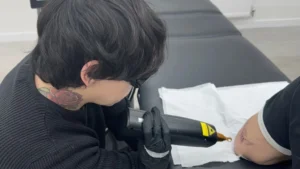
Female skin specialist performing a professional chemical peel treatment in Dubai
What Future Skin Specialists Should Learn About Peels
Learning chemical peels involves more than knowing how to apply a product.
A practitioner should understand:
- Different acids
- Concentration
- pH
- Application time
- Skin preparation
- Layering
- Neutralisation where required
- Expected skin response
- Post-treatment care
A skin specialist should also know when not to perform a peel.
Professional judgement is just as important as the treatment technique itself.
2. Microneedling
Microneedling is another advanced treatment commonly associated with professional skincare.
The technique uses very fine needles to create controlled microchannels within the skin.
It may form part of treatment programmes designed to address concerns such as:
- Uneven texture
- Fine lines
- Post-acne appearance
- Enlarged pores
- General skin rejuvenation
Because microneedling intentionally interacts with the skin barrier, hygiene and treatment protocols are particularly important.
Future practitioners should understand:
- Skin anatomy
- Needle depth
- Treatment areas
- Client preparation
- Contraindications
- Infection control
- Product selection
- Healing
- Aftercare
Microneedling should not simply be viewed as using a device across the face. Proper assessment and professional technique are essential.
3. Mesotherapy-Based Facial Treatments
Mesotherapy-style skincare treatments are designed around introducing selected professional ingredients to support specific skin goals.
Depending on the treatment method and professional scope, products may contain ingredients aimed at:
- Hydration
- Brightening
- Skin rejuvenation
- Improving the appearance of texture
- Supporting ageing skin
A skin specialist needs to understand that product selection should be based on the client’s skin rather than choosing the same solution for everyone.
Important areas of knowledge include:
- Active ingredients
- Skin condition
- Treatment objectives
- Contraindications
- Application techniques
- Hygiene
- Treatment frequency
- Aftercare
The Level 2 Clinical Skincare Course is a relevant progression option for students who want to develop further clinical-skincare knowledge alongside their broader skin-specialist training.
Beauty therapists considering this type of progression can also read Clinical Skincare Is a Valuable Next Step for Beauty Therapists.
4. Hydradermabrasion and HydraFacial-Style Treatments
Hydradermabrasion treatments combine several skincare stages within a technology-assisted facial.
Depending on the system being used, a treatment may involve:
- Cleansing
- Exfoliation
- Extraction
- Hydration
- Serum infusion
This type of facial can be attractive to clients because several treatment stages can be combined into one appointment.
However, the machine itself does not replace professional knowledge.
A trained skin specialist still needs to assess:
- Skin type
- Congestion
- Sensitivity
- Hydration levels
- Active breakouts
- Treatment intensity
- Appropriate serums
- Contraindications
The treatment should be adapted to the client rather than performed using identical machine settings every time.
Why This Treatment Is Particularly Relevant in Dubai
Dubai clients may experience a combination of environmental and lifestyle factors affecting the appearance and feel of their skin.
These may include frequent air conditioning, heat, sun exposure and changes between indoor and outdoor environments.
A skin specialist should therefore evaluate the individual client’s skin rather than assume that every client needs the same “hydrating” facial.
5. Dermaplaning
Dermaplaning is a professional exfoliation technique that removes superficial dead skin cells and fine facial hair using a specialised sterile blade.
The treatment can leave the skin feeling smoother and may be incorporated into professional facial programmes.
Future practitioners should understand:
- Correct blade handling
- Skin positioning
- Treatment angles
- Pressure
- Hygiene
- Contraindications
- Treatment sequencing
- Post-treatment skincare
Dermaplaning requires precision.
Incorrect technique can increase the risk of unnecessary irritation or injury, which is why practical professional training is important.
Who May Not Be Suitable for Dermaplaning?
The practitioner should carefully assess clients with concerns such as:
- Active acne
- Inflamed skin
- Open wounds
- Active infections
- Significant irritation
- Certain inflammatory conditions
A treatment should never be selected simply because it is popular on social media.
Skin suitability comes first.
6. LED Light Therapy
LED light therapy uses specific wavelengths of visible or near-visible light as part of professional skincare treatments.
Different types of LED light may be incorporated into treatment programmes depending on the equipment and intended skin objective.
LED may be combined with other facial treatments as part of a wider protocol.
Future practitioners should understand:
- Different wavelengths
- Treatment duration
- Client positioning
- Eye protection
- Contraindications
- Treatment frequency
- Appropriate combinations with other procedures
LED is sometimes perceived as a simple treatment because it does not involve aggressive exfoliation or needles.
However, professional equipment still needs to be used according to appropriate protocols.
7. Advanced Technology-Assisted Facials
Modern skincare clinics increasingly use professional equipment alongside traditional facial techniques.
Technology-assisted treatments may involve systems designed for:
- Deep cleansing
- Exfoliation
- Product infusion
- Skin analysis
- Hydration
- Rejuvenation
- Firming treatments
For students interested in technology-led beauty treatments, understanding equipment can become an important professional skill.
However, the machine should never replace practitioner knowledge.
The skin specialist still needs to understand:
- What the technology does
- Who may benefit from it
- Who should avoid it
- Appropriate settings
- Treatment sequencing
- Hygiene
- Client comfort
- Aftercare
Students wanting to expand further into technology-based aesthetics can also explore the Complete Laser Technician Course.
Why Skin Analysis Should Come Before Every Advanced Facial
Advanced facial treatments should not begin with choosing a machine or product.
They should begin with skin analysis.
A professional consultation may assess:
- Skin type
- Hydration
- Oil production
- Sensitivity
- Pigmentation
- Texture
- Congestion
- Breakouts
- Current skincare routine
- Previous treatments
- Medication
- Lifestyle
- Sun exposure
- Treatment goals
This information helps the practitioner decide which treatment may be appropriate.
For example, the treatment chosen for dehydrated skin may be completely different from the approach used for congestion or pigmentation.
Dubai’s Diverse Client Base Makes Skin Assessment Important
Dubai’s population includes people from many different nationalities and skin backgrounds.
Future practitioners may therefore encounter a broad range of:
- Skin tones
- Skin sensitivities
- Pigmentation patterns
- Skincare routines
- Environmental exposures
- Treatment histories
This makes personalised consultation particularly important for practitioners planning to work in Dubai.
How Advanced Facial Treatments Can Be Combined
Professional skin treatments do not always need to exist independently.
Depending on the client’s skin, practitioner qualifications and treatment protocol, some techniques may be incorporated into wider treatment programmes.
For example, a skin programme may involve:
- Consultation and skin analysis
- Professional cleansing
- Appropriate exfoliation
- Technology-assisted treatment
- Hydration
- LED where suitable
- Professional skincare products
- Home-care recommendations
However, more treatments do not automatically mean better results.
A good practitioner needs to understand when treatments complement one another and when combining treatments could create unnecessary irritation.
Practical Training Is Essential
Advanced skincare treatments require hands-on skills.
Reading about microneedling, chemical peels or technology-assisted facials is not the same as performing them professionally.
Students should develop practical experience in:
- Client consultation
- Skin analysis
- Treatment-room preparation
- Hygiene
- Equipment preparation
- Product selection
- Client positioning
- Treatment technique
- Monitoring skin response
- Aftercare
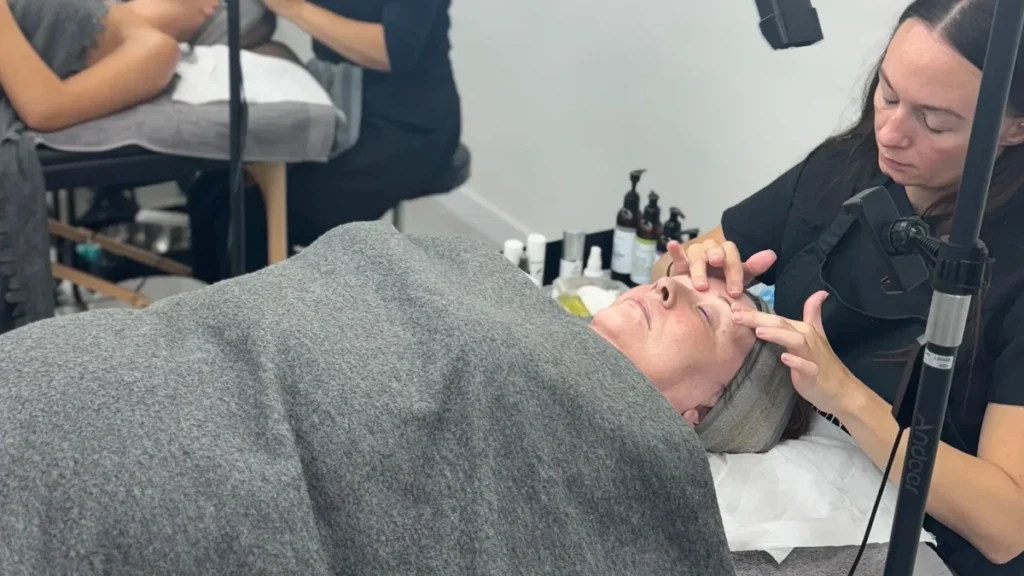
Female skincare practitioner performing a facial treatment in Dubai
Practical experience also helps students develop confidence when communicating with clients.
The Importance of Contraindications
Advanced treatments can produce stronger interactions with the skin than basic facials.
This makes contraindication knowledge essential.
A practitioner may need to modify, postpone or avoid treatment depending on factors such as:
- Active infection
- Open wounds
- Severe irritation
- Recent aesthetic treatments
- Certain medications
- Pregnancy where relevant to the treatment
- Allergies
- Skin sensitivity
- Specific medical conditions
The correct decision is sometimes not to perform the treatment.
That judgement is an important part of professional skincare.
Treatment Aftercare Matters
Client care continues after the facial has finished.
Aftercare may vary depending on the procedure, but professional advice can include:
- Avoiding unnecessary exfoliation
- Using gentle skincare
- Keeping the skin hydrated
- Using appropriate SPF
- Avoiding excessive heat where required
- Avoiding picking or touching treated areas
- Following product recommendations
- Monitoring unexpected skin responses
Advanced procedures often require more detailed aftercare than basic facials.
Practitioners should clearly explain this before clients leave the treatment room.
Building a Career as an Advanced Skin Specialist in Dubai
Developing knowledge across several treatment categories can help students build a broader professional foundation.
Potential working environments may include:
- Beauty salons
- Skin clinics
- Aesthetic centres
- Luxury spas
- Wellness centres
- Hotel spas
- Multi-treatment beauty businesses
The treatments someone can professionally perform will depend on their training, qualifications, permitted scope and any applicable local requirements.
Students looking for a broader skin-focused training pathway can explore the Ultimate Skin Specialist Diploma.
What Should a Future Skin Specialist Learn?
A professional skin specialist should aim to develop knowledge beyond individual treatments.
Important skills include:
- Skin anatomy
- Skin analysis
- Consultation
- Product ingredients
- Treatment planning
- Contraindications
- Professional hygiene
- Advanced facial techniques
- Equipment knowledge
- Client communication
- Aftercare
- Record keeping
A practitioner who understands why a treatment is being selected will be better prepared than someone who simply memorises treatment steps.
Start Developing Advanced Skincare Skills in Dubai
Advanced facial treatments can help future skin specialists develop a more diverse professional skill set.
The seven important treatment areas covered in this guide are:
- Chemical peels
- Microneedling
- Mesotherapy-based treatments
- Hydradermabrasion and HydraFacial-style treatments
- Dermaplaning
- LED light therapy
- Advanced technology-assisted facials
Students wanting broader training in professional skin treatments can explore the Ultimate Skin Specialist Diploma.
Those who want to progress further into clinical skincare can also consider the Level 2 Clinical Skincare Course, while students interested in expanding into laser technology can explore the Complete Laser Technician Course.
Frequently Asked Questions
1. What are advanced facial treatments?
Advanced facial treatments use specialist techniques, professional products or technology to address particular skin concerns beyond the scope of a basic facial.
2. Which advanced facial treatments should a skin specialist know?
Important treatments can include chemical peels, microneedling, mesotherapy-style treatments, hydradermabrasion, dermaplaning, LED therapy and technology-assisted facial procedures.
3. What course can I take to become an advanced skin specialist in Dubai?
Students looking for broader skincare education can explore the Ultimate Skin Specialist Diploma.
4. Are chemical peels suitable for everyone?
No. Skin type, sensitivity, medication, existing skin conditions and other factors can affect treatment suitability. Professional consultation is important before treatment.
5. Is microneedling an advanced skincare treatment?
Yes. Microneedling requires knowledge of skin anatomy, hygiene, treatment depth, contraindications and professional aftercare.
6. Is practical training important for advanced facial treatments?
Yes. Hands-on training helps students develop proper technique, understand equipment and learn how different clients’ skin responds.
7. What is the difference between a basic facial and an advanced facial?
Basic facials generally focus on cleansing, exfoliation, hydration and relaxation. Advanced facials may incorporate stronger professional products, specialised techniques or technology to target specific concerns.
8. Can skin specialists also learn laser treatments?
Yes, depending on qualifications and professional requirements. Students interested in laser technology can explore the Complete Laser Technician Course.
9. What course should I take for clinical skincare in Dubai?
Students wanting to develop further clinical skincare knowledge can explore the Level 2 Clinical Skincare Course.
10. Why is skin analysis important before an advanced facial?
Skin analysis helps the practitioner identify the client’s skin type, concerns, sensitivity and possible contraindications. This allows treatment to be selected and adapted more appropriately.