Wood therapy and lymphatic drainage have become increasingly visible across spas, wellness centres and body-treatment businesses. Although the two treatments may sometimes appear together on treatment menus, they use very different techniques, levels of pressure and treatment approaches.
Lymphatic drainage primarily uses gentle manual movements designed around the lymphatic system. Wood therapy, sometimes called maderotherapy, uses specially shaped wooden tools during body-focused massage and wellness treatments.
For beauty and spa professionals in Dubai, understanding both techniques can be useful when developing a broader body-treatment skill set.
Students interested in learning the two approaches together can explore the Lymphatic Drainage Course, which includes wood therapy training.
What Is Lymphatic Drainage?
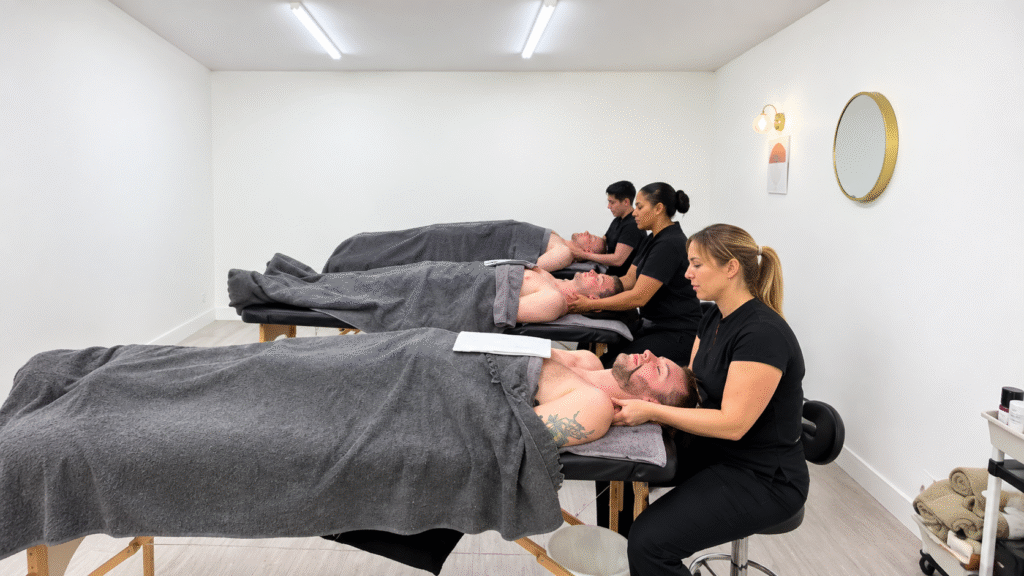
Manual lymphatic drainage, commonly abbreviated to MLD, is a specialised massage technique using light, rhythmic and carefully directed hand movements.
The technique is very different from deep-tissue massage.
Professional lymphatic drainage typically involves:
- Light pressure
- Slow rhythmic movements
- Repetitive sequences
- Specific treatment directions
- Knowledge of lymphatic pathways
- Careful client assessment
The lymphatic system helps return excess fluid from tissues and forms part of the body’s immune and circulatory functions. In healthcare, manual lymphatic drainage can form part of lymphoedema management.
For beauty and wellness practitioners, this makes proper training in anatomy, contraindications and treatment technique particularly important.
What Is Wood Therapy?
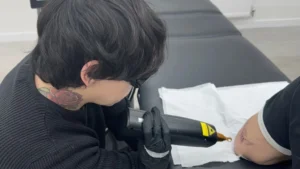
Wood therapy uses specially designed wooden massage tools during body treatments.
Different tools have different shapes and may be used for different movements or areas of the body.
Common tools can include:
- Wooden rollers
- Contoured boards
- Sculpting tools
- Mushroom-shaped tools
- Ribbed rollers
Unlike lymphatic drainage, wood therapy generally involves more mechanical pressure and manipulation.
The practitioner uses the tools according to the treatment protocol rather than relying exclusively on their hands.
Wood Therapy vs Lymphatic Drainage: The Main Difference
The simplest distinction is:
Lymphatic drainage uses specialised gentle manual movements.
Wood therapy uses wooden tools to perform body-focused massage techniques.
Although both may be offered within wellness settings, they should not be treated as interchangeable services.
Quick Comparison
| Area | Lymphatic Drainage | Wood Therapy |
|---|---|---|
| Main technique | Manual hand movements | Wooden massage tools |
| Pressure | Generally very light | Usually more noticeable |
| Main focus | Lymphatic pathways | Body massage and tissue manipulation |
| Equipment | Usually hands | Specialised wooden tools |
| Rhythm | Slow and controlled | Can be more energetic |
| Anatomy knowledge | Essential | Essential |
| Consultation | Essential | Essential |
| Contraindications | Important | Important |
| Practical training | Essential | Essential |
1. The Pressure Is Very Different
One of the most important differences between the two techniques is pressure.
Lymphatic Drainage Pressure
Lymphatic drainage generally uses light pressure.
This is because the treatment is designed around superficial lymphatic pathways rather than attempting to manipulate deep muscle tissue.
Cleveland Clinic describes lymphatic drainage as using light pressure and strategic massage techniques to encourage fluid toward functioning lymph vessels and lymph nodes.
Applying significantly more pressure does not automatically make lymphatic drainage more effective.
Wood Therapy Pressure
Wood therapy usually produces more noticeable mechanical pressure because the therapist is working with solid wooden implements.
The practitioner needs to understand:
- Tool angle
- Pressure
- Movement
- Speed
- Direction
- Client comfort
More pressure is not necessarily better.
The treatment still needs to be controlled and appropriate for the client.
2. The Techniques Are Different
Lymphatic drainage is primarily a manual technique.
A practitioner may use carefully controlled movements with:
- Palms
- Fingers
- Gentle stretching movements
- Rhythmic pumping techniques
Wood therapy replaces or supplements manual techniques with specialised tools.

Movements may include:
- Rolling
- Gliding
- Controlled pressure
- Repetitive tool movements
- Contouring-style techniques
Students learning both treatments therefore need to develop very different types of hand control.
3. Lymphatic Drainage Requires Knowledge of the Lymphatic System
A professional practitioner needs to understand the basic anatomy of the lymphatic system.
Important areas include:
- Lymph vessels
- Lymph nodes
- Lymph fluid
- Lymphatic pathways
- Direction of drainage
Unlike blood circulation, the lymphatic system does not have a central pump like the heart. Muscle movement and other physiological processes contribute to moving lymph through the body.
This is why lymphatic drainage should not simply be treated as a lighter version of normal massage.
The direction and sequence of movements matter.
4. Wood Therapy Requires Tool-Control Skills
Wood therapy presents a different learning challenge.
Future therapists need to become comfortable using several differently shaped tools.
Professional training should cover:
- What each tool is designed for
- How the tool should be held
- Appropriate pressure
- Direction of movement
- Treatment areas
- Client positioning
- Tool hygiene
- Contraindications
A therapist should never apply wooden tools aggressively simply because a client believes stronger pressure will produce a better result.
Technique and client comfort should come first.
5. Lymphatic Drainage Is Usually Gentler
Some clients may expect lymphatic drainage to feel like an intense body massage.
That is not generally how proper manual lymphatic drainage is performed.
The movements are typically:
- Gentle
- Slow
- Repetitive
- Controlled
For clients accustomed to deep-tissue massage, the light pressure may initially feel unusual.
This is one reason consultation is useful: the therapist can explain how the technique differs before treatment begins.
6. Wood Therapy Can Feel More Intensive
Wooden rollers and sculpting tools create a very different treatment sensation.
The client may feel:
- Rolling pressure
- Repetitive strokes
- Firmer contact
- Mechanical massage movements
However, treatment should not be unnecessarily painful.
Bruising or excessive discomfort should not be treated as evidence that a treatment is “working.”
A professional therapist should constantly monitor how the client is responding.
7. Treatment Goals Can Differ
Clients may book the two treatments for different reasons.
Lymphatic Drainage
In clinical contexts, MLD is used to support lymph movement and can form part of lymphoedema management.
In wellness environments, clients may also seek it because they are interested in:
- Gentle massage
- Relaxation
- Temporary reduction in feelings of puffiness
- Specialist body treatments
Wood Therapy
Wood therapy is more commonly positioned within beauty and wellness settings as a body-focused massage technique.
Clients may choose it because they are interested in:
- Body massage
- A more intensive treatment experience
- Wellness treatments
- Body-focused beauty services
Therapists should avoid promising permanent body reshaping, weight loss or other unsupported outcomes.
8. Neither Treatment Should Be Marketed as a Weight-Loss Solution
This is particularly important for professional therapists.
Social media sometimes presents both lymphatic drainage and wood therapy as methods for dramatic weight loss or permanent body transformation.
That is misleading.
Neither treatment should replace:
- Exercise
- Balanced nutrition
- Medical care
- Appropriate professional advice
Visual changes immediately following some body treatments may not represent actual fat loss.
Professional marketing should use realistic language rather than guaranteed transformation claims.
9. Be Careful with “Detox” Claims
The word detox is frequently used in spa marketing.
However, practitioners should be careful about claiming that either treatment “removes toxins from the body.”
The liver, kidneys and other physiological systems are responsible for the body’s primary detoxification processes.
A more accurate explanation of lymphatic drainage is that the technique is designed to encourage lymphatic fluid movement.
Professional language builds more credibility than exaggerated wellness claims.
10. Client Consultation Is Essential for Both
Neither treatment should begin without an appropriate consultation.
Important questions can include:
- Why is the client booking?
- Have they had the treatment previously?
- Are there areas of swelling?
- Are there injuries?
- Have they recently had surgery?
- Are they taking medication?
- Do they have cardiovascular conditions?
- Are there skin infections?
- Are there areas of unusual pain?
- Are they pregnant?
The answers may affect whether the treatment should proceed.
11. Lymphatic Drainage Has Important Contraindications
Because lymphatic drainage affects fluid movement, certain health conditions require particular caution.
Cleveland Clinic advises avoiding lymphatic drainage in circumstances including:
- Blood clots
- Deep-vein thrombosis
- Cellulitis
- Active infection
- Fever
- Certain heart conditions
- Kidney failure
Persistent or unexplained swelling should not simply be treated cosmetically.
A client may need appropriate healthcare assessment.
12. Wood Therapy Also Requires Contraindication Awareness
Wood therapy can involve significantly more mechanical pressure.
Therapists therefore need to consider conditions such as:
- Bruising
- Open wounds
- Skin infections
- Significant inflammation
- Recent injuries
- Recent surgery
- Severe sensitivity
- Certain circulatory conditions
A therapist should work within their professional scope and refer clients appropriately when something appears outside cosmetic or wellness practice.
13. Can Lymphatic Drainage and Wood Therapy Be Combined?
They may be taught or offered within the same broader body-treatment programme, but the techniques should remain distinct.
A treatment sequence might use different approaches at different stages depending on:
- Practitioner training
- Client goals
- Treatment protocol
- Contraindications
- Client tolerance
The Lymphatic Drainage Course includes wood therapy, allowing students to learn how the two approaches differ rather than treating them as the same technique.
14. Why Practical Training Matters
Both treatments are highly technique-dependent.
Watching videos online does not teach you:
- Correct pressure
- Anatomy
- Hand positioning
- Tool angle
- Treatment sequence
- Client positioning
- Contraindications
- Client assessment
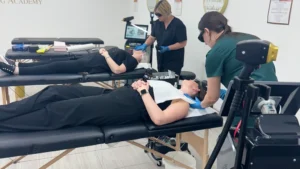
Hands-on training allows students to feel how treatments should be performed and receive feedback on their technique.
15. Wood Therapy Requires Good Therapist Body Mechanics
Using wooden tools can become physically demanding when performed repeatedly.
Therapists should learn how to use:
- Body weight
- Correct posture
- Stable stance
- Relaxed wrists
- Controlled movements
Poor technique can cause unnecessary strain on the therapist’s hands, wrists, shoulders or back.
Professional training should therefore consider therapist ergonomics as well as client technique.
16. Lymphatic Drainage Requires Patience and Control
Lymphatic drainage may appear less physically demanding because it uses lighter movements.
However, maintaining the correct:
- Pressure
- Rhythm
- Direction
- Sequence
requires concentration.
Therapists need to resist the temptation to increase pressure simply because the technique feels gentle.
Correct technique is more important than intensity.
17. Which Treatment Is More Suitable for Spa Therapists?
Both can complement a spa-therapy background.
A spa therapist may already understand:
- Massage
- Anatomy
- Client consultation
- Draping
- Body treatments
- Hygiene
Adding lymphatic drainage and wood therapy can broaden this foundation.
Students who want comprehensive training in massage and spa treatments can also explore the Complete Spa Therapist Course.
This can provide a useful foundation before or alongside more specialised body treatments.
18. Which Treatment Is More Suitable for Beauty Therapists?
Beauty therapists who want to expand into body treatments may find both techniques useful.
However, they should first ensure they have a strong foundation in:
- Anatomy
- Consultation
- Hygiene
- Contraindications
- Client positioning
A specialist treatment should always build on professional fundamentals.
19. Can Lymphatic Techniques Be Used on the Face?
Gentle lymphatic techniques are also used in facial and skincare environments.
Facial lymphatic drainage may be discussed in relation to temporary puffiness and relaxation. Cleveland Clinic notes its use as a cosmetic treatment for facial puffiness.
Practitioners who want to develop broader professional facial and skin-treatment knowledge can explore the Ultimate Skin Specialist Diploma.
This can complement body-treatment education for therapists who want to provide both facial and wellness services.
20. Why These Skills Are Relevant in Dubai
Dubai has a well-developed beauty, spa and luxury-wellness market.
Treatments are offered within:
- Hotel spas
- Wellness centres
- Beauty salons
- Body-treatment studios
- Aesthetic and wellness businesses
Professional lymphatic drainage is already available through Dubai-based wellness and clinic providers, while luxury Dubai spas offer extensive body-treatment programmes.
For future therapists, understanding specialist body techniques can help create a broader treatment portfolio.
21. Which Technique Should You Learn First?
There is no universal answer.
If you want to focus primarily on spa massage and wellness, a sensible progression may be:
- Learn anatomy and physiology.
- Develop foundational massage skills.
- Learn client consultation.
- Understand contraindications.
- Learn lymphatic drainage.
- Add wood therapy.
- Continue developing specialist body treatments.
Students who already have a professional massage foundation may progress more directly into specialised training.
22. How to Choose Between Wood Therapy and Lymphatic Drainage for a Client
A professional therapist should not simply ask:
“Which treatment does the client want?”
They should also ask:
“Is this treatment appropriate for this client?”
Consider:
- Client objectives
- Medical history
- Skin condition
- Treatment preferences
- Sensitivity
- Contraindications
- Previous body treatments
- Practitioner scope
The most popular treatment is not automatically the right treatment.
Wood Therapy vs Lymphatic Drainage: Which Is Better?
Neither treatment is universally better.
They serve different purposes and use different techniques.
Lymphatic Drainage May Be Appropriate When:
- A gentle manual technique is required
- The practitioner is appropriately trained
- The client is suitable for the treatment
- A lymphatic-focused technique is intended
Wood Therapy May Be Appropriate When:
- The client wants a more intensive body-treatment experience
- Wooden-tool techniques suit the treatment objective
- The therapist has appropriate training
- There are no relevant contraindications
For professionals, the advantage of learning both is the ability to understand the differences and select techniques more appropriately.
Build Your Body-Treatment Skills in Dubai
Wood therapy and lymphatic drainage can both be valuable additions to a professional beauty or spa therapist’s treatment knowledge.
The main differences are clear:
Lymphatic drainage
- Primarily manual
- Uses light pressure
- Follows lymphatic pathways
- Requires detailed anatomy knowledge
- Uses controlled rhythmic movements
Wood therapy
- Uses specialised wooden tools
- Usually involves more mechanical pressure
- Requires tool-handling skills
- Uses body-focused massage movements
- Requires careful pressure control
Students who want practical training in both techniques can explore the Lymphatic Drainage Course, which includes wood therapy.
Professionals looking for broader massage and wellness skills can also explore the Complete Spa Therapist Course, while those interested in adding more advanced facial and skin services can consider the Ultimate Skin Specialist Diploma.
Frequently Asked Questions
1. What is the main difference between wood therapy and lymphatic drainage?
Lymphatic drainage primarily uses gentle manual movements directed around lymphatic pathways. Wood therapy uses shaped wooden tools to perform body-focused massage techniques.
2. Is lymphatic drainage supposed to be painful?
No. Professional manual lymphatic drainage generally uses gentle, light pressure rather than deep massage.
3. Is wood therapy painful?
A client may feel stronger pressure than during lymphatic drainage, but treatment should not involve unnecessary pain. Pressure should be adapted according to client comfort and professional technique.
4. Can wood therapy and lymphatic drainage be learned together?
Yes. Students can explore the Lymphatic Drainage Course, which includes wood therapy training.
5. Is wood therapy the same as lymphatic drainage?
No. They use different techniques. Wood therapy relies on specialised wooden tools, whereas manual lymphatic drainage primarily uses carefully controlled hand movements.
6. Can lymphatic drainage reduce swelling?
Manual lymphatic drainage is used clinically as part of lymphoedema management to encourage fluid movement, although medical lymphoedema treatment should be managed by appropriately trained healthcare or specialist professionals.
7. Does lymphatic drainage detox the body?
Claims that massage “removes all toxins” should be treated cautiously. Lymphatic drainage is better described as a specialised technique intended to support lymphatic fluid movement.
8. Can spa therapists learn these treatments?
Yes. Therapists with an appropriate foundation may progress into specialist body treatments. Students looking for broader spa education can also explore the Complete Spa Therapist Course.
9. Is practical training important for wood therapy?
Yes. Students need to learn correct tool handling, pressure, movement, anatomy, consultation and contraindications through practical training.
10. Can lymphatic drainage techniques be used within facial treatments?
Gentle facial lymphatic techniques are used within some beauty and skincare treatments. Practitioners wanting broader professional skin knowledge can explore the Ultimate Skin Specialist Diploma.