Lash and brow treatments have become an important part of the modern beauty industry. From eyelash extensions and Korean lash lifts to brow mapping, tinting, waxing and lamination, clients increasingly look for specialists who can provide professional treatments tailored to their features.
For someone looking to enter Dubai’s beauty industry, becoming a lash and brow technician can provide a specialised career path with opportunities to work in salons, lash and brow bars, beauty studios or eventually build a freelance client base.
However, creating professional results requires much more than learning how to apply lashes or shape eyebrows. A technician needs to understand consultation, facial features, lash and brow anatomy, hygiene, product selection, application techniques, contraindications and aftercare.
Students who want comprehensive training across both areas can explore the Complete Lash & Brow Technician Course.
What Does a Lash & Brow Technician Do?
A lash and brow technician specialises in treatments designed to enhance the eyes, eyelashes and eyebrows.
Depending on their training, services may include:
- Eyelash extensions
- Lash lifting
- Lash tinting
- Brow mapping
- Brow shaping
- Brow waxing
- Brow tinting
- Brow lamination
- Henna brows
- Party lashes
- Advanced brow styling
The role combines technical precision, beauty knowledge, consultation skills and creativity.
A successful technician needs to understand that every client’s face, natural lashes and brows are different. Treatments therefore need to be personalised rather than performed using exactly the same style on everyone.
Why Consider a Lash & Brow Career in Dubai?
Dubai has an established beauty and personal-care industry serving residents, professionals, tourists and clients from many different cultural backgrounds.
Lash and brow services can work particularly well as specialist beauty treatments because many require regular maintenance.
For example, clients may return for:
- Lash extension infills
- Brow shaping
- Brow tinting
- Lash lifting
- Brow lamination
- Lash and brow maintenance
This repeat-treatment model can help technicians gradually develop a regular client base.
Dubai Beauty Training’s current Complete Lash & Brow Technician Course specifically prepares students for careers including salon or lash-and-brow-bar work, home-based services, mobile treatments and starting a lash and brow business.
1. Start with Professional Lash & Brow Training
The first step is developing the correct technical foundation.
Trying to learn professional treatments solely through short social-media videos can leave important gaps in areas such as hygiene, contraindications, lash isolation and client safety.
Structured training should cover both theory and practical application.
The Complete Lash & Brow Technician Course includes training across a broad selection of treatments, including:
- Lash extensions
- Brow mapping
- Brow styling
- Brow tinting
- Brow waxing
- Korean lash lifting
- Lash tinting
- Expert brows
- Eyebrow extensions
- Henna brows
This makes it particularly useful for beginners who want to develop several complementary services instead of qualifying in only one treatment.
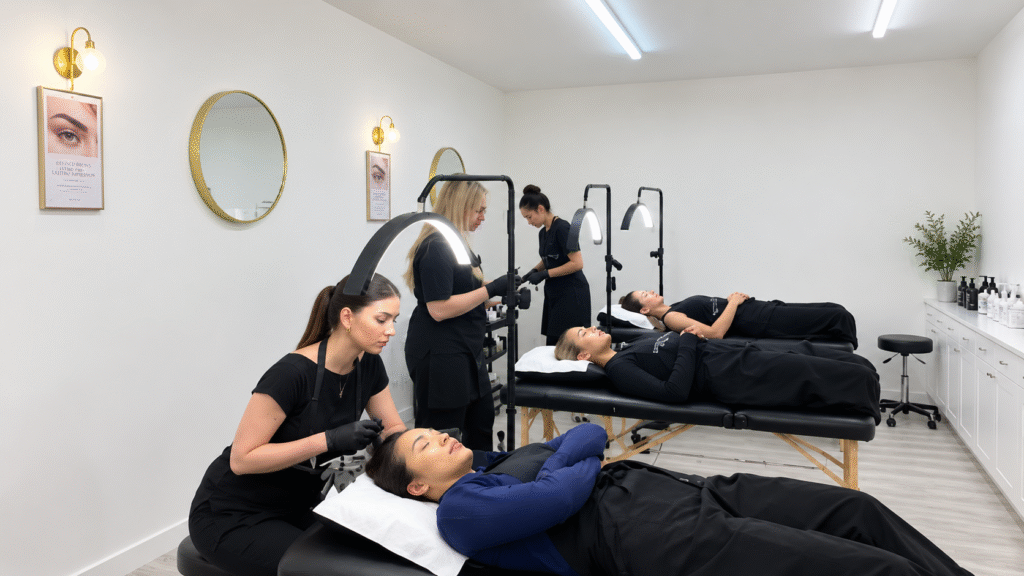
Female beauty students receiving practical training at a Dubai beauty academy
2. Learn Professional Client Consultation
Every appointment should begin with an appropriate consultation.
Clients often arrive with inspiration photographs or a particular lash or brow style in mind. However, the treatment needs to be suitable for their natural features.
A consultation may consider:
- Natural lash condition
- Natural brow growth
- Eye shape
- Face shape
- Previous treatments
- Allergies
- Skin sensitivity
- Desired result
- Maintenance commitment
- Contraindications
A good technician combines the client’s preferences with professional judgement.
For example, a dramatic lash style may look attractive in a photograph but may not be appropriate for every client’s natural lashes or lifestyle.
3. Master Lash Extensions
Eyelash extensions are one of the core skills for many lash technicians.
The procedure involves attaching extensions to individual natural lashes while maintaining appropriate isolation and placement.
Students need to develop skills in:
- Lash isolation
- Adhesive control
- Extension placement
- Lash mapping
- Length selection
- Curl selection
- Thickness selection
- Direction
- Symmetry
- Safe removal
Precision is extremely important because lash extensions are applied close to the eyes.
Poor technique can result in uncomfortable lashes, premature shedding or unnecessary stress on the client’s natural lashes.
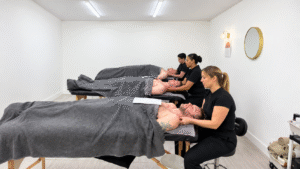
Professional eyelash extension training and treatment in Dubai
4. Understand Lash Mapping
Lash mapping allows technicians to plan where different lash lengths and styles will be placed.
Rather than applying identical lashes across the entire eye, mapping can help create a more personalised result.
A technician may consider:
- Eye shape
- Natural lash direction
- Desired finish
- Inner corner
- Centre of the eye
- Outer corner
- Lash strength
Popular styling concepts can include more natural, open-eye or elongated effects.
The aim should be to complement the client’s features rather than simply follow trends.
5. Learn Modern Lash Lift Techniques
Not every client wants eyelash extensions.
Some prefer treatments that enhance their natural lashes.
A lash lift changes the appearance and direction of natural lashes, creating a more lifted and defined effect.
Korean lash lifting has become another treatment option for practitioners looking to expand their service menu.
Students particularly interested in combining natural lash and brow treatments can also explore the Korean Lash Lift & Brow Lamination Course.
Students comparing modern lifting techniques can also read Korean Lash Lift vs Traditional Lash Lift.
Important areas of lash lift training include:
- Lash assessment
- Shield selection
- Lash placement
- Product application
- Processing times
- Lash tinting
- Contraindications
- Aftercare
A professional technician should understand how the treatment works rather than relying solely on standard processing times.
6. Develop Professional Brow Mapping Skills
Brows can significantly influence the appearance and balance of the face.
Brow mapping helps technicians assess where the brow should begin, arch and finish.
Future brow technicians should understand:
- Facial proportions
- Natural brow growth
- Symmetry
- Brow thickness
- Arch placement
- Client preferences
Brow mapping is not about forcing every client into the same shape.
Instead, it provides a framework for creating a brow design suited to the individual.
Students who want to understand the wider professional brow pathway can also read How to Become a Professional Brow Artist in Dubai.
7. Learn Brow Shaping and Waxing
Once the brow has been mapped, shaping techniques can be used to refine the design.
These may include:
- Waxing
- Tweezing
- Trimming
- Styling
Technicians should know how to work carefully around the delicate eye and brow area.
Important considerations include:
- Wax temperature
- Skin sensitivity
- Product application
- Hair-growth direction
- Skin tension
- Contraindications
- Aftercare
Professional shaping should enhance the client’s natural brows rather than remove excessive hair simply to follow a trend.
8. Add Brow Tinting and Henna Brows
Colour treatments can add definition to lighter or less visible brow hair.
Brow tinting requires understanding:
- Shade selection
- Development time
- Product application
- Skin sensitivity
- Colour intensity
- Client expectations
Henna brows provide another styling option and can create additional definition.
The Complete Lash & Brow Technician programme currently includes both brow tinting and henna brow training, allowing students to develop multiple brow services within one pathway.
9. Learn Brow Lamination
Brow lamination has become a popular treatment for clients seeking fuller, more styled brows.
The treatment helps reposition brow hairs to create a more controlled shape.
It can be especially useful when natural brow hairs grow in different directions.
A technician needs to understand:
- Brow hair condition
- Product application
- Processing
- Styling direction
- Contraindications
- Brow shaping
- Aftercare
Brow lamination and Korean lash lifting can also be offered as complementary services, which is one reason combined training can be useful.
10. Build Advanced Lash Skills
Once a technician becomes confident with foundational lash-extension techniques, they may want to develop more advanced styling skills.
Volume lashes are one progression route.
Instead of using a single extension to create the finished look, volume techniques can involve carefully creating and positioning multiple ultra-fine lashes.
Students interested in developing this specialism can explore the Russian Volume Lash Course.
Advanced training can introduce techniques for creating:
- 2D volume
- 3D volume
- 4D volume
- 5D volume
- 6D volume
These services require precision, control and a good understanding of natural-lash health.
11. Hygiene Is Essential
Lash and brow technicians work extremely close to a client’s eyes and face.
Professional hygiene is therefore essential.
Good working practices include:
- Washing and sanitising hands
- Cleaning treatment surfaces
- Disinfecting reusable tools appropriately
- Using disposable items where required
- Keeping products clean
- Preparing a clean treatment station
- Properly storing tools
- Avoiding cross-contamination
Clients notice cleanliness.
A well-organised and hygienic treatment environment can also strengthen their confidence in the technician.
12. Learn Contraindications
Not every client should receive every lash or brow treatment.
Technicians need to recognise situations where treatment may need to be changed, postponed or avoided.
Depending on the procedure, considerations can include:
- Eye infections
- Skin infections
- Allergic reactions
- Severe irritation
- Damaged natural lashes
- Recent eye procedures
- Certain skin conditions
- Product sensitivities
A professional technician should never prioritise completing a treatment over client safety.
13. Practical Training Builds Confidence
Lash and brow work requires fine motor skills.
Techniques such as isolation, brow mapping and lash placement develop through practice.
Hands-on education allows students to practise:
- Client positioning
- Tool handling
- Lash isolation
- Extension placement
- Brow mapping
- Waxing
- Tinting
- Lash lifting
- Treatment timing
- Consultation
- Aftercare
Hands-on lash and brow training for beauty students in Dubai
The Complete Lash & Brow Technician Course currently combines theoretical teaching with practical experience and is listed as suitable for beginners with no previous experience.
14. Build a Strong Treatment Portfolio
When starting your career, photographs can become an important part of demonstrating your work.
With client consent, consider documenting treatments such as:
- Classic lashes
- Lash lifts
- Brow shaping
- Brow tinting
- Brow lamination
- Henna brows
- Before-and-after transformations
Photographs should be:
- Clear
- Well lit
- Consistent
- Professionally framed
- Free from excessive filters
Potential clients usually want to see real treatment results.
A portfolio can therefore become an important marketing tool when working independently or applying for salon positions.
15. Develop Client-Retention Skills
Technical ability attracts clients, but service quality helps bring them back.
A professional lash and brow technician should:
- Arrive prepared
- Maintain hygiene
- Listen carefully
- Explain treatments
- Give clear aftercare
- Keep accurate records
- Manage appointments professionally
- Avoid unrealistic promises
For lash-extension technicians in particular, repeat infill appointments can become an important part of building a regular client schedule.
16. Consider Specialising Further in Brows
Some lash and brow technicians eventually decide to specialise more heavily in brow treatments.
For students interested in developing advanced semi-permanent brow skills, the Combination Brow Course provides another progression route.
This type of training moves beyond standard brow styling into semi-permanent makeup techniques.
It may be relevant for practitioners wanting to build a more specialised brow-focused career after developing their foundational skills.
17. Decide How You Want to Work
After training and meeting applicable professional requirements, lash and brow technicians may explore several ways of working.
These can include:
- Beauty salons
- Lash bars
- Brow bars
- Beauty studios
- Freelance work
- Mobile beauty services
- Home-based services where permitted
- Building an independent beauty business
Dubai Beauty Training’s live course page specifically identifies salon work, dedicated lash-and-brow bars, mobile services, home-based work and starting an independent lash-and-brow business as potential career routes after training.
18. Understand the Business Side
Being technically skilled does not automatically create a successful business.
Self-employed technicians also need to think about:
- Pricing
- Appointment scheduling
- Deposits
- Cancellation policies
- Treatment timings
- Product costs
- Marketing
- Client retention
- Social media
- Reviews
- Rebooking
Keeping accurate records of treatment costs and appointment duration can help you understand which services are most sustainable for your business.
19. Use Social Media to Showcase Your Work
Lashes and brows are highly visual services.
Platforms such as Instagram can therefore be useful for showcasing treatment results.
Content ideas include:
- Before-and-after images
- Lash transformations
- Brow transformations
- Treatment videos
- Lash-lift results
- Brow-lamination results
- Client reviews
- Aftercare tips
- Behind-the-scenes training
- Appointment availability
Avoid relying only on promotional posts.
Educational content can help demonstrate professional knowledge and build confidence in your services.
20. Keep Updating Your Skills
Beauty trends change quickly.
Treatments that become popular can create new opportunities for technicians who keep their skills current.
Recent examples include:
- Korean lash lifting
- Brow lamination
- Russian volume lashes
- Advanced brow styling
- Semi-permanent brow techniques
Continuing education allows practitioners to add services gradually instead of relying on the same treatment menu throughout their career.
Start Your Lash & Brow Technician Career in Dubai
Building a successful lash and brow career requires a combination of technical training, practical experience, creativity, client care and professional standards.
Future technicians should aim to develop skills across:
- Lash anatomy
- Eyelash extensions
- Lash mapping
- Lash lifting
- Lash tinting
- Brow mapping
- Brow shaping
- Brow waxing
- Brow tinting
- Henna brows
- Hygiene
- Consultation
- Contraindications
- Aftercare
For students who want comprehensive training across multiple services, the Complete Lash & Brow Technician Course provides a structured starting point.
As your career develops, further training such as the Korean Lash Lift & Brow Lamination Course, Russian Volume Lash Course or Combination Brow Course can help you develop more specialised skills.
Frequently Asked Questions
1. How do I become a lash and brow technician in Dubai?
A practical starting point is to complete professional training covering lash and brow theory, practical techniques, consultation, hygiene, contraindications and aftercare. You should also check the current professional requirements applicable to how and where you intend to work.
2. Can beginners become lash and brow technicians?
Yes. The Complete Lash & Brow Technician Course currently lists beginners with no previous experience as suitable students.
3. What treatments should a lash and brow technician learn?
Useful skills include lash extensions, lash lifting, lash tinting, brow mapping, shaping, waxing, tinting, henna brows and brow styling.
4. How long is the Complete Lash & Brow Technician Course?
The current Dubai Beauty Training course page lists the programme duration as four days.
5. Does the Complete Lash & Brow Technician Course include Korean Lash Lift?
Yes. The current programme includes Korean Lash Lift training alongside its other lash and brow techniques.
6. Is practical training important?
Yes. Lash and brow techniques require precision, hand control and correct product application. Practical training helps students develop these skills under supervision.
7. Can I specialise in volume lashes later?
Yes. After developing foundation skills, students interested in advanced volume techniques can explore the Russian Volume Lash Course.
8. Can I learn lash lifting and brow lamination together?
Yes. The Korean Lash Lift & Brow Lamination Course combines these two treatments within one programme.
9. Can lash and brow technicians become self-employed?
Potential working models can include freelance, mobile and independent services, subject to the professional and business requirements that apply in Dubai.
10. Can I progress into semi-permanent brow treatments?
Yes. Practitioners interested in progressing beyond standard brow services can explore specialist programmes such as the Combination Brow Course.