Dubai has developed a strong beauty and aesthetics sector, with professional clinics offering services ranging from skincare and laser hair reduction to advanced aesthetic treatments. For people interested in working in this industry, becoming a laser technician can be a specialised career path that combines technical knowledge, client care and practical treatment skills.
However, learning to operate a laser machine is only one part of the profession. A laser technician also needs to understand skin and hair, client consultation, treatment suitability, safety procedures, contraindications, treatment settings and aftercare.
Professional training such as the Complete Laser Technician Course can help students develop the knowledge and practical skills required to start building a career in laser and aesthetics.
Students specifically interested in the professional opportunities around hair-reduction treatments can also read Laser Hair Removal as a Career in Dubai.
What Does a Laser Technician Do?
A laser technician works with specialised laser or light-based equipment to perform treatments within their permitted professional scope.
Depending on their qualifications, licensing, workplace and training, their work may include treatments and responsibilities such as:
- Laser hair reduction
- IPL treatments
- Skin rejuvenation procedures
- Client consultations
- Skin and hair assessments
- Patch testing
- Preparing treatment areas
- Selecting appropriate treatment parameters
- Recording treatment information
- Providing aftercare advice
- Monitoring the client’s skin response
Laser technicians therefore require a combination of technical knowledge, practical ability and strong client-care skills.
1. Understand the Fundamentals of Laser Treatments
Before working with professional laser equipment, students need to understand how laser and light-based technologies interact with the skin.
Important areas include:
Skin Anatomy and Physiology
Understanding the layers and functions of the skin is important when assessing clients and planning treatments.
Hair Growth Cycles
Laser hair reduction works in relation to the growth cycle of the hair. Technicians therefore need to understand the different stages of hair development and why multiple treatment sessions may be required.
Skin Types
Different skin tones can respond differently to laser energy. Understanding skin classification systems such as the Fitzpatrick scale helps technicians make more informed treatment decisions.
Laser and IPL Principles
Students should understand concepts such as:
- Wavelength
- Energy
- Pulse duration
- Laser media
- IPL filters
- Light absorption
- Melanin
- Treatment parameters
The Dubai Health Authority’s published course outline for laser and IPL training includes skin and hair anatomy, Fitzpatrick skin types, laser science, laser terminology, biophysics and differences between laser and IPL technologies.
2. Complete Professional Laser Technician Training
Professional training is one of the most important stages in becoming a laser technician.
The Complete Laser Technician Course is suitable for students who want to develop broader knowledge and practical skills within laser treatments rather than focusing on only one individual procedure.
Training may cover areas such as:
- Laser and IPL principles
- Skin and hair assessment
- Client consultation
- Treatment suitability
- Contraindications
- Patch testing
- Laser safety
- Machine preparation
- Treatment settings
- Practical treatment techniques
- Treatment protocols
- Client aftercare
- Professional record keeping
Practical training is particularly important because students need to understand not only how to use the equipment, but also why particular settings and treatment approaches are chosen.
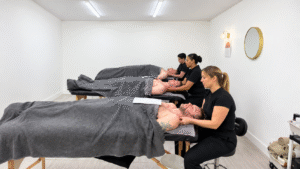
Practical laser technician course training in Dubai
3. Develop Strong Client Consultation Skills
A successful laser treatment begins before the machine is switched on.
Consultation is an important part of a laser technician’s role because it helps determine whether a treatment is appropriate for the client.
During a consultation, the technician may need to discuss:
- Treatment goals
- Medical history
- Medication
- Previous treatments
- Skin sensitivity
- Hair characteristics
- Recent sun exposure
- Contraindications
- Expected results
- Possible skin reactions
- Aftercare
Good consultation skills also help technicians set realistic client expectations.
For example, laser hair reduction generally involves a series of treatments rather than one session, and results can differ depending on hair type, skin type, hormones and other individual factors.
4. Learn How to Work Safely with Laser Equipment
Safety is one of the most important parts of professional laser training.
Laser equipment delivers concentrated energy and must be operated according to proper procedures.
Students should learn about:
- Protective eyewear
- Controlled treatment environments
- Equipment preparation
- Machine checks
- Correct treatment parameters
- Client protection
- Practitioner protection
- Cleaning and hygiene
- Treatment documentation
- Recognising unexpected skin responses
- Appropriate aftercare
A professional technician should never rely entirely on automatic machine settings.
Instead, they should understand the principles behind the treatment and follow the protocols appropriate to their training and professional scope.
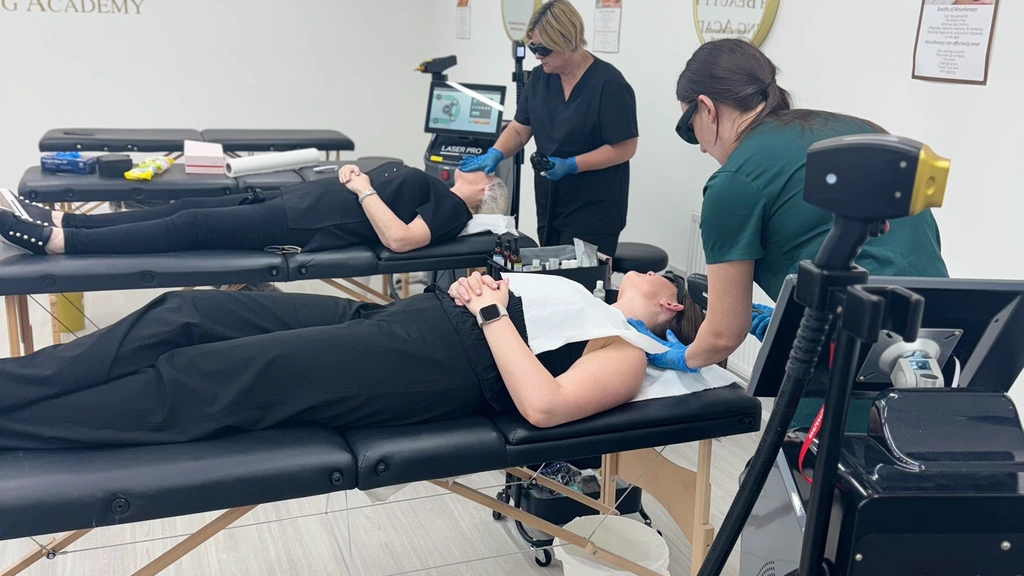
Laser safety training for aspiring laser technicians in Dubai
5. Consider Specialising in Laser Tattoo Removal
Once students have developed broader laser knowledge, they may decide to specialise further.
Laser tattoo removal is one possible specialist area.
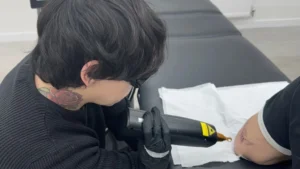
Students interested in this treatment can explore the Laser Tattoo Removal Course.
Tattoo removal requires additional knowledge because technicians need to consider factors such as:
- Tattoo ink colour
- Pigment depth
- Tattoo age
- Skin type
- Appropriate wavelengths
- Treatment intervals
- Healing response
- Client expectations
Developing specialist skills can help technicians expand their professional knowledge and potentially work within clinics offering a wider range of laser treatments.
Students comparing the two major laser specialisms can also read Laser Tattoo Removal vs Laser Hair Removal in Dubai.
6. Build a Strong Understanding of Skin
Laser technicians work directly with the skin, so developing broader skincare knowledge can be extremely useful.
Clients considering laser treatments may also have concerns relating to:
- Pigmentation
- Skin texture
- Acne
- Ageing
- Dryness
- Sensitivity
- Uneven skin tone
Understanding skin conditions and treatment principles can improve the quality of client consultations and help technicians recognise situations where treatment may need to be postponed or referred.
Students wanting broader advanced skincare knowledge can explore the Ultimate Skin Specialist Diploma.
This can be particularly relevant for students who eventually want to offer a broader range of professional skin and aesthetics treatments.
7. Understand Professional and Licensing Requirements in Dubai
Completing a training programme and obtaining permission to practise professionally are not necessarily the same thing.
People planning to work in Dubai should check the latest regulatory requirements for their intended professional role and treatment scope.
Dubai Health Authority’s current standards state that nurses and beauty therapists carrying out applicable laser and IPL procedures must hold the appropriate DHA licensing title, while laser and IPL treatments covered by the standard must take place within a DHA-licensed health facility under the required professional supervision.
For healthcare professionals, DHA’s Sheryan system outlines a licensing process that includes registration followed by activation of the professional licence through a healthcare facility.
Requirements can depend on factors such as:
- Your existing professional qualification
- Your intended job title
- Previous training
- Professional registration
- The treatments you intend to perform
- Your place of employment
- Your permitted scope of practice
Because regulations and eligibility requirements can change, students should always check the latest DHA requirements before assuming that completion of a training course alone authorises them to practise.
8. Gain Practical Experience
Practical experience is essential for developing confidence.
During hands-on laser training, students should focus on more than simply completing a treatment.
Important practical skills include:
Client Positioning
The client should be positioned correctly so the treatment area can be accessed safely and comfortably.
Machine Preparation
Students should understand how to prepare and check equipment before treatments.
Parameter Selection
Different clients may require different approaches depending on factors such as skin type, hair characteristics and treatment area.
Handpiece Technique
Good control of the laser handpiece helps maintain consistency across the treatment area.
Observation
Technicians need to observe how the skin responds throughout the treatment.
Treatment Flow
Treatments should be performed methodically and according to established protocols rather than being rushed.
Practical experience also helps students become more comfortable communicating with clients throughout the procedure.
9. Develop Complementary Skincare Skills
Laser treatments are often offered alongside other professional skin treatments.
Developing additional skincare knowledge can therefore create a more versatile professional skill set.
Students who are still building their skincare foundation may also consider the Level 2 Clinical Skincare Course.
Combining skincare and laser knowledge can be particularly useful for professionals who eventually want to work within:
- Skin clinics
- Laser clinics
- Aesthetic centres
- Beauty and wellness facilities
- Multi-treatment clinics
10. Decide What Type of Laser Career You Want
Once you have completed appropriate training and met the relevant professional requirements, you can start thinking about the type of career you want to build.
Depending on your qualifications and permitted scope of practice, opportunities may exist within:
- Laser clinics
- Aesthetic clinics
- Skin clinics
- Specialist hair-reduction clinics
- Multi-treatment beauty facilities
- Medical aesthetic facilities
Some professionals may eventually move into senior treatment roles, clinic management, advanced aesthetics or business ownership.
Others choose to specialise further in particular treatment areas.
The best route depends on your existing qualifications, professional interests and the type of treatments you eventually want to provide.
Essential Skills for a Laser Technician
Professional qualifications provide the technical foundation, but other skills are equally important when working with clients.
Useful skills include:
- Attention to detail
- Good communication
- Professional client care
- Confidence with technology
- Accurate record keeping
- Knowledge of skin and hair
- Safety awareness
- Hygiene standards
- Treatment planning
- Ability to follow protocols
- Willingness to continue learning
Laser technology continues to evolve, so ongoing professional development can also become an important part of your career.
Can Beginners Become Laser Technicians?
People enter the beauty and aesthetics industry from many different backgrounds.
Some students already work as beauty therapists, skincare professionals or aesthetics practitioners and want to add laser treatments to their existing services.
Others may be exploring the industry for the first time.
The appropriate route will depend on your previous qualifications and the licensing requirements associated with the professional role you intend to pursue.
For students interested in developing a broader foundation in laser treatments, the Complete Laser Technician Course provides a structured route for developing laser knowledge and practical treatment skills.
How Long Does It Take to Become a Laser Technician in Dubai?
There is no single timeline that applies to every student.
Your pathway can depend on:
- Your existing qualifications
- The training programme you choose
- Practical experience requirements
- Additional qualifications
- Regulatory requirements
- Professional registration or licensing
- The type of clinic or facility you want to work in
Someone already working within beauty or aesthetics may follow a different progression route from someone entering the sector without previous training.
The important objective is to build the appropriate skills and qualifications rather than rushing the process.
Is Laser Technology a Good Skill to Add to a Beauty Career?
For established beauty professionals, laser training can broaden the range of advanced treatments they understand and may help them progress into more specialised environments.
It can also complement skills in areas such as:
- Clinical skincare
- Advanced facials
- Skin analysis
- Tattoo removal
- Hair reduction
- Aesthetic treatments
Building complementary qualifications can help professionals develop a more rounded understanding of clients’ beauty and skin concerns.
Start Your Laser Technician Training in Dubai
Becoming a laser technician requires more than simply learning how to operate equipment.
A professional pathway should include:
- Knowledge of skin and hair
- Laser and IPL principles
- Client consultation
- Treatment planning
- Practical experience
- Laser safety
- Contraindications
- Aftercare
- Professional standards
- Appropriate licensing for your intended role
The Complete Laser Technician Course can help students develop a strong foundation in professional laser treatments and begin building the practical skills needed for a career within Dubai’s beauty and aesthetics industry.
Whether your long-term goal is to work within a laser clinic, progress into advanced aesthetics or combine laser treatments with professional skincare, structured training is an important first step.