Dubai has a large and diverse beauty and aesthetics market, with demand for professional skincare services across salons, spas, skin clinics and aesthetic centres. For someone interested in building a career around facial treatments, skin analysis and advanced skincare, becoming a skin specialist can offer a clear professional pathway.
However, working as a skin specialist requires much more than knowing how to perform a facial. You need to understand skin anatomy, skin types, client consultation, contraindications, professional products, treatment planning, hygiene and advanced treatment techniques.
Students who want to build a broad foundation in professional skincare can explore the Ultimate Skin Specialist Diploma.
What Does a Skin Specialist Do?
A skin specialist works with clients to assess their skin and provide appropriate professional skincare treatments within their qualifications and permitted scope of practice.
Depending on training and workplace, responsibilities may include:
- Client consultation
- Skin analysis
- Identifying skin types
- Recognising common skin concerns
- Preparing treatment plans
- Performing professional facials
- Exfoliation treatments
- Hydration treatments
- Advanced skincare procedures
- Providing aftercare advice
- Recommending suitable home-care routines
- Maintaining client treatment records
The role combines technical skincare knowledge with practical treatment skills and client communication.
Why Consider a Career as a Skin Specialist in Dubai?
Dubai’s beauty industry serves a highly diverse population.
Skin specialists may work with clients from different climates, ethnic backgrounds and lifestyles, which means practitioners need to understand a broad range of skin characteristics and concerns.
Common areas that clients may seek professional help with include:
- Dry or dehydrated skin
- Oily skin
- Congestion
- Uneven texture
- Pigmentation
- Ageing concerns
- Dullness
- Sensitivity
- Post-acne concerns
The diversity of Dubai’s client base means that practitioners need strong assessment skills rather than relying on one treatment approach for everyone.
1. Start with Professional Skincare Training
The first major step towards becoming a skin specialist is completing structured professional training.
The Ultimate Skin Specialist Diploma is designed for students who want to develop a broader understanding of professional skincare and advanced treatment techniques.
Training should help students develop knowledge across areas such as:
- Skin anatomy and physiology
- Skin types
- Common skin conditions
- Client consultation
- Contraindications
- Hygiene
- Treatment preparation
- Professional skincare products
- Treatment protocols
- Practical facial techniques
- Aftercare
Professional skincare training in Dubai commonly combines theory with hands-on treatment experience, because skin analysis and practical technique cannot be learned effectively from theory alone.
2. Learn Skin Anatomy and Physiology
A good skin specialist needs to understand the structure and function of the skin.
This includes knowledge of:
- Epidermis
- Dermis
- Skin barrier
- Sebaceous glands
- Sweat glands
- Melanin
- Collagen
- Elastin
- Cell renewal
Understanding skin structure makes it easier to understand why particular treatments or products are selected.
For example, a professional working with pigmentation should understand the role of melanin, while someone working with ageing concerns should understand collagen and skin structure.
3. Learn How to Analyse Different Skin Types
Skin analysis is one of the most important skills a skin specialist develops.
Before recommending a treatment, the practitioner should understand the client’s skin.
Common skin types include:
- Normal
- Dry
- Oily
- Combination
- Sensitive
However, skin type alone does not tell the complete story.
A practitioner may also need to identify concerns such as:
- Dehydration
- Congestion
- Pigmentation
- Breakouts
- Texture
- Sensitivity
- Fine lines
- Sun-related changes
Dubai’s diverse population makes accurate skin assessment especially important.
4. Client Consultation Is Essential
Professional skincare begins with consultation.
A skin specialist needs to understand what the client wants while also identifying factors that may affect treatment suitability.
A consultation may include:
- Current skincare routine
- Skin concerns
- Previous treatments
- Allergies
- Medication
- Medical history
- Skin sensitivity
- Lifestyle
- Sun exposure
- Treatment expectations
Good consultation allows the practitioner to create a more personalised treatment plan.
It also helps identify situations where a treatment may need to be postponed or avoided.
5. Learn Professional Facial Treatments
Facial treatments remain an important part of professional skincare.
A practitioner should understand how to perform treatments methodically rather than simply following a fixed sequence for every client.
Professional facial training may include:
- Cleansing
- Skin analysis
- Exfoliation
- Steam where appropriate
- Extraction techniques
- Massage
- Masks
- Serums
- Moisturising
- SPF application
- Aftercare
The treatment should be adapted according to the client’s skin rather than delivered identically each time.
Students wanting to understand how traditional facial services differ from more targeted procedures can also read Clinical Skincare vs Traditional Facials.
6. Progress into Advanced Clinical Skincare
As your skills develop, you may want to move beyond traditional facials into more advanced skincare techniques.
Students interested in this route can explore the Level 2 Clinical Skincare Course.
Clinical skincare training can help students develop knowledge around more advanced treatment approaches and professional protocols.
Depending on the programme, students may learn areas such as:
- Chemical exfoliation
- Microneedling
- Mesotherapy-related techniques
- Skin rejuvenation
- Treatment preparation
- Contraindications
- Post-treatment care
This can be a useful progression for someone wanting to work in a more advanced aesthetics environment.
Beauty professionals considering this progression can also read Clinical Skincare Is a Valuable Next Step for Beauty Therapists.
7. Build Strong Hygiene and Safety Habits
Skin specialists work directly with clients’ faces and may use professional tools, products and equipment.
Good hygiene is therefore essential.
Practitioners should develop consistent habits around:
- Hand hygiene
- Surface cleaning
- Equipment disinfection
- Single-use consumables
- Product handling
- Clean towels and linen
- Treatment-room preparation
- Client protection
Professional hygiene protects both the practitioner and the client.
It also helps create a more professional treatment environment.
8. Understand Contraindications
Not every client is suitable for every treatment.
A trained skin specialist needs to recognise situations where treatment may need to be modified, postponed or avoided.
Potential contraindications can include:
- Active skin infections
- Open wounds
- Severe irritation
- Certain medications
- Recent procedures
- Allergic reactions
- Certain medical conditions
- Extreme skin sensitivity
Understanding contraindications is an important part of safe and responsible treatment planning.
9. Learn How Professional Skincare Products Work
A skin specialist should understand ingredients rather than recommending products based only on branding.
Useful areas of product knowledge include:
- Cleansers
- Acids
- Enzymes
- Antioxidants
- Hydrating ingredients
- Retinoids
- Niacinamide
- Vitamin C
- Moisturisers
- SPF
The practitioner should understand:
- What an ingredient does
- Which skin types may benefit
- When it should be avoided
- How products may interact
- How to build a suitable routine
Good product knowledge improves both professional treatments and home-care recommendations.
10. Develop Practical Skills Through Hands-On Training
Practical experience is one of the most important parts of skincare training.
Students should have opportunities to practise:
- Consultation
- Skin analysis
- Treatment preparation
- Product selection
- Facial techniques
- Equipment use
- Client positioning
- Treatment sequencing
- Aftercare
Hands-on training helps students develop confidence and learn how real clients respond differently.
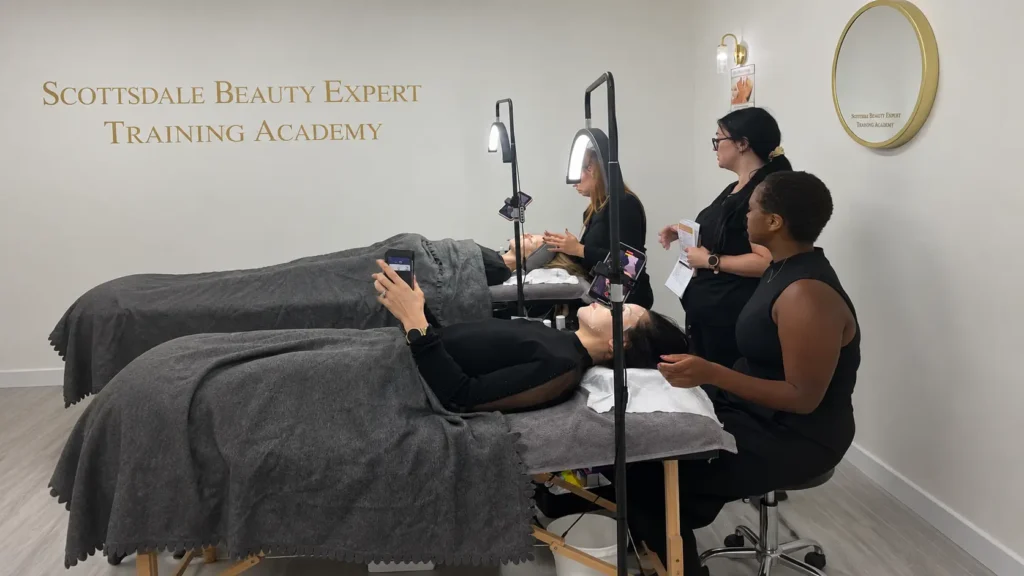
Dubai-based beauty academies commonly emphasise live-model and practical clinic experience as part of professional skincare education.
11. Consider Adding Laser Knowledge
Skincare and laser treatments often exist within the same aesthetics environment.
A skin specialist who understands laser technology may eventually be able to broaden their knowledge beyond traditional skincare, depending on qualifications and professional permissions.
Students interested in wider technology-based treatment training can explore the Complete Laser Technician Course.
Laser training can complement knowledge of:
- Skin assessment
- Pigmentation
- Skin rejuvenation
- Consultation
- Contraindications
- Treatment safety
This can be useful for practitioners who want to build a broader aesthetics career.
12. Communication Skills Matter
A skin specialist needs to explain complex information in a simple way.
Clients may ask questions such as:
- Why is my skin dry?
- Which treatment should I choose?
- How many sessions will I need?
- Which products should I use?
- Why am I experiencing pigmentation?
- When will I see results?
A professional practitioner should avoid overpromising.
Instead, they should explain:
- What the treatment is designed to do
- What results may realistically be expected
- How often treatments may be required
- What the client should do at home
- When treatment may not be suitable
Strong communication helps build trust and encourages better client compliance.
13. Learn How to Create Treatment Plans
Skin specialists often need to think beyond one individual appointment.
A client with pigmentation, congestion or ageing concerns may require a longer-term treatment strategy.
A professional treatment plan may consider:
- The client’s main concern
- Skin type
- Treatment frequency
- Treatment intensity
- Home-care products
- Seasonal considerations
- Lifestyle
- Previous treatment response
Treatment planning should be personalised.
This is particularly important in Dubai, where sun exposure, air conditioning and lifestyle factors may affect skin differently from client to client.
14. Keep Building Your Knowledge
Skincare changes continuously.
New ingredients, technologies and treatment techniques regularly enter the aesthetics market.
Successful practitioners should continue developing their knowledge through:
- Advanced training
- Product education
- Practical workshops
- Industry events
- Updated treatment protocols
- Professional reading
A qualification should be viewed as the beginning of professional development rather than the end.
15. Where Can a Skin Specialist Work in Dubai?
Depending on qualifications, professional permissions and experience, skin specialists may work within settings such as:
- Beauty salons
- Spas
- Skincare clinics
- Aesthetic centres
- Wellness centres
- Luxury hotels
- Multi-treatment beauty businesses
Dubai has a well-established beauty-training market, with professional facial and skincare courses aimed at preparing practitioners for salon, spa and clinic-based roles.
The exact role available will depend on your training, employer requirements and any professional regulations that apply to the treatments you intend to perform.
16. Can Beginners Become Skin Specialists?
Yes, beginners can start building professional skincare skills through foundational training.
The appropriate pathway depends on:
- Previous experience
- Course entry requirements
- Career objectives
- Treatments you want to perform
- Professional requirements
A comprehensive programme such as the Ultimate Skin Specialist Diploma can provide a structured pathway for students wanting to develop broader skincare knowledge.
17. Build a Broader Beauty Career
Skin specialist training can also work well alongside other beauty disciplines.
Some practitioners eventually choose to combine skincare with:
- Laser treatments
- Facial technology
- Advanced skin procedures
- Massage
- Brows and lashes
- Wellness treatments
The best combination depends on the kind of career you want to develop.
A practitioner interested in laser technology could progress into the Complete Laser Technician Course, while someone focused on advanced skin procedures may prefer the Level 2 Clinical Skincare Course.
Start Your Skin Specialist Career in Dubai
Becoming a skin specialist requires more than learning how to perform facials.
A strong professional foundation includes:
- Skin anatomy
- Skin analysis
- Client consultation
- Treatment planning
- Product knowledge
- Professional facial techniques
- Hygiene
- Contraindications
- Advanced skincare knowledge
- Practical experience
- Client communication
Students who want to develop these skills can explore the Ultimate Skin Specialist Diploma and begin building a broader understanding of professional skincare.
For students who want to progress further, complementary training such as the Level 2 Clinical Skincare Course or Complete Laser Technician Course can help expand their professional knowledge.
Frequently Asked Questions
1. How do I become a skin specialist in Dubai?
A typical pathway involves completing professional skincare training, developing practical treatment skills and understanding the professional requirements associated with the treatments you want to perform.
2. Which course can I take to become a skin specialist in Dubai?
Students looking for broad skincare training can explore the Ultimate Skin Specialist Diploma.
3. Can beginners become skin specialists?
Yes. Beginners can start with structured skincare training and gradually progress into more advanced treatment techniques.
4. What skills does a skin specialist need?
Important skills include skin analysis, client consultation, facial techniques, product knowledge, hygiene, identifying contraindications, treatment planning and aftercare.
5. Is practical training important?
Yes. Practical experience helps students apply theoretical skincare knowledge to real client treatments and develop confidence.
6. What is the difference between a facial therapist and a skin specialist?
A facial therapist may focus primarily on performing facial treatments, while a skin specialist may develop broader knowledge around skin analysis, treatment planning, professional products and more advanced skincare procedures.
7. Can skin specialists learn advanced clinical treatments?
Yes. Students wanting to progress into more advanced skincare can consider the Level 2 Clinical Skincare Course.
8. Can a skin specialist also learn laser treatments?
Yes. Depending on qualifications and professional requirements, skincare professionals may choose to develop complementary laser knowledge through programmes such as the Complete Laser Technician Course.
9. Where can skin specialists work in Dubai?
Depending on qualifications and permitted scope, opportunities may exist in salons, spas, skincare clinics, wellness centres and aesthetic businesses.
10. Is product knowledge important for a skin specialist?
Yes. Understanding active ingredients, formulation types and appropriate product selection helps practitioners provide better treatments and more informed home-care recommendations.