Lymphatic drainage massage has become increasingly visible across spas, wellness centres and body-treatment clinics in Dubai. Unlike deep-tissue massage, it uses light, controlled and rhythmic movements designed around the body’s lymphatic system.
For beauty and spa professionals, lymphatic drainage is also becoming a valuable specialist skill because it adds a different type of body treatment to a traditional massage menu.
Students interested in learning the technique professionally can explore the Lymphatic Drainage Course, which also includes wood therapy training.
What Is the Lymphatic System?
The lymphatic system is part of the body’s circulatory and immune systems.
It consists of a network of:
- Lymph vessels
- Lymph nodes
- Lymph fluid
- Lymphatic tissues and organs
One of its roles is to collect excess fluid from tissues and return it to the circulation.
Unlike the cardiovascular system, the lymphatic system does not have a central pump like the heart. Movement, muscle activity and other physiological processes help lymph move through the body.
Understanding the basic structure and function of this system is essential before learning professional lymphatic drainage techniques.
What Is Lymphatic Drainage Massage?
Manual lymphatic drainage, often shortened to MLD, is a specialised massage technique using gentle, strategic movements.
The technique is very different from a deep-tissue or sports massage.
Instead of applying strong pressure into the muscles, lymphatic drainage typically uses:
- Light pressure
- Slow movements
- Rhythmic strokes
- Specific treatment directions
- Repetitive sequences
In clinical care, manual lymphatic drainage is used as part of treatment for lymphoedema and associated swelling. The NHS describes it as a specialised massage technique that encourages fluid flow through the lymphatic system.
In beauty and wellness settings, practitioners may also encounter clients looking for gentler body treatments focused on relaxation and temporary feelings of reduced puffiness.
Why Has Lymphatic Drainage Become So Popular?
There is no single reason.
Its popularity comes from a combination of wellness trends, social media, increased interest in body treatments and demand for gentler massage techniques.
Here are some of the main reasons.
1. It Is Different from Traditional Massage
Many clients associate massage with firm pressure.
Lymphatic drainage is different.
The technique generally uses much lighter movements because lymphatic structures sit relatively close to the skin.
This makes it an interesting specialist treatment for therapists who already provide traditional massage.
A practitioner may therefore offer different treatments for different client goals rather than trying to use deep pressure for every appointment.
2. Clients Are Increasingly Interested in Puffiness and Fluid Retention
Lymphatic drainage is frequently discussed in relation to swelling and excess fluid.
In medical contexts, trained specialists may use manual lymphatic drainage to support people with lymphoedema and related swelling. Cleveland Clinic describes the technique as gentle manipulation intended to encourage excess fluid to move toward functioning lymph vessels and nodes.
Beauty therapists should be careful not to turn this into exaggerated claims about “detoxing” or treating medical conditions.
Professional consultation and appropriate scope of practice remain essential.
3. It Fits the Wellness Market
Dubai has a substantial luxury wellness and spa sector.
Clients may already book services such as:
- Massage
- Body treatments
- Spa rituals
- Facials
- Wellness treatments
- Body exfoliation
Lymphatic drainage can fit naturally alongside these services.
Professionals wanting a broader foundation across spa treatments can also explore the Complete Spa Therapist Course.
For more context on the growing role of specialist body services within spa businesses, see Why Body Treatments Are Becoming More Important in Modern Spas.
How Is Lymphatic Drainage Different from Normal Massage?
The biggest differences are usually pressure, purpose and technique.
Traditional Relaxation Massage
A traditional massage may work primarily with muscles and soft tissues.
It can use techniques such as:
- Effleurage
- Petrissage
- Kneading
- Compression
- Circular movements
Pressure may range from light to firm depending on the treatment.
Lymphatic Drainage Massage
Lymphatic drainage usually uses:
- Much lighter pressure
- Slower movements
- Repetitive strokes
- Specific directions
- Carefully planned treatment sequences
Cleveland Clinic similarly describes manual lymphatic drainage as a light-pressure technique rather than a deep-tissue massage.
What Happens During a Lymphatic Drainage Treatment?
The exact treatment depends on the practitioner’s training, client and treatment objective.
A professional appointment will normally begin with consultation.
The therapist may consider:
- Medical history
- Client concerns
- Previous treatments
- Swelling
- Medication
- Recent surgery
- Skin condition
- Contraindications
The practitioner may then use gentle movements over specific areas according to their training.
Professional MLD protocols commonly begin by working around areas containing functioning lymph nodes before directing fluid from other tissues toward those pathways.
Why Is the Pressure So Light?
This is one of the most important things future therapists need to understand.
Lymphatic drainage is not supposed to feel like deep-tissue massage.
Applying more pressure does not automatically make the technique more effective.
Professional training helps practitioners learn:
- Appropriate pressure
- Hand positioning
- Treatment rhythm
- Treatment direction
- Correct sequencing
A therapist who only understands deep massage may need to deliberately change their hand technique when learning lymphatic drainage.
What Areas Can Be Included?
Depending on the purpose of treatment, practitioner training and client suitability, techniques may involve areas such as:
- Abdomen
- Legs
- Arms
- Back
- Neck
- Face
The treatment should never simply follow a generic routine without considering the individual client.
Assessment comes first.
What Is Facial Lymphatic Drainage?
Lymphatic techniques may also be used on the face.
Gentle facial lymphatic movements are often discussed in beauty settings for temporarily reducing the appearance of puffiness and creating a more refreshed appearance.
Cleveland Clinic notes that facial lymphatic drainage may help with puffiness, although the effect and usefulness vary between individuals.
Practitioners interested in broader professional facial skills can complement body-treatment training with the Ultimate Skin Specialist Diploma.
What Is Wood Therapy?
Wood therapy, sometimes called maderotherapy, uses specially shaped wooden tools within body-treatment protocols.
Different tools may be designed for different areas and movements.
Training should cover:
- Tool selection
- Correct handling
- Treatment direction
- Pressure
- Hygiene
- Client positioning
- Contraindications
- Client comfort
The Lymphatic Drainage Course includes wood therapy, allowing students to develop another complementary body-treatment skill alongside lymphatic techniques.
Lymphatic Drainage vs Wood Therapy
Although they may be offered within similar beauty and wellness environments, they are not the same treatment.
Lymphatic Drainage
Generally focuses on:
- Gentle manual movements
- Light pressure
- Lymphatic pathways
- Controlled treatment sequences
Wood Therapy
Uses:
- Specialised wooden tools
- Different movement patterns
- Body-focused techniques
- Pressure according to the treatment protocol
A trained therapist should understand the differences rather than treating both techniques as interchangeable.
For a detailed comparison of these two treatments, see Wood Therapy vs Lymphatic Drainage.
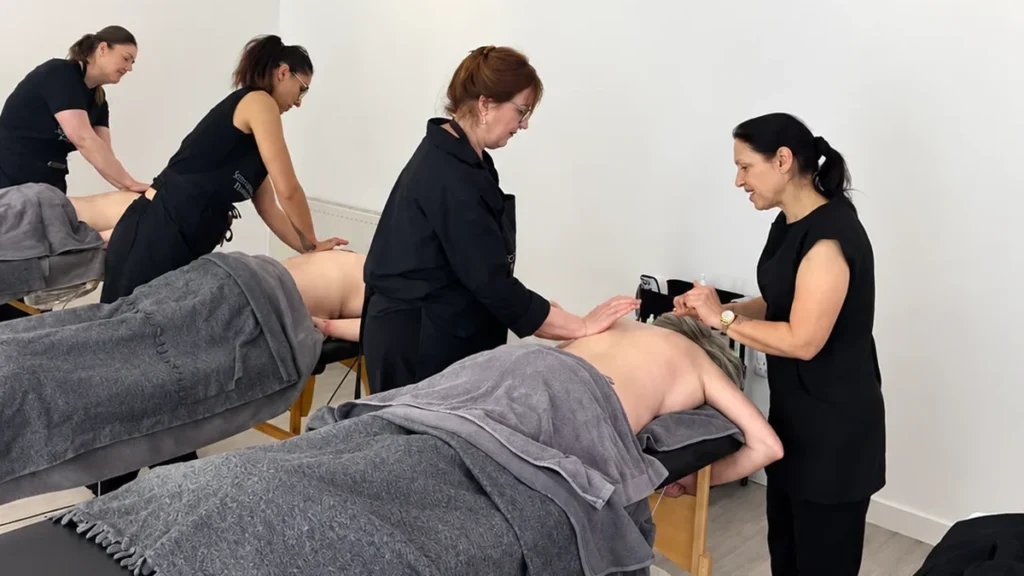
Why Practical Training Is Important
Lymphatic drainage looks simple when viewed in a short video.
In practice, the technique requires a good understanding of:
- Anatomy
- The lymphatic system
- Treatment direction
- Pressure
- Hand positioning
- Contraindications
- Client assessment
This makes hands-on practice important.
Students need to feel how light the pressure should be and learn how to connect individual movements into a structured treatment.
Who Should Avoid Lymphatic Drainage Massage?
Lymphatic drainage is not appropriate for everyone.
According to Cleveland Clinic, situations requiring avoidance or medical guidance can include conditions such as:
- Blood clots
- Deep-vein thrombosis
- Cellulitis
- Fever
- Active infection
- Certain heart conditions
- Kidney failure
- Stroke history in relevant circumstances
Professional therapists should not attempt to diagnose these conditions themselves.
If a client has unexplained swelling or a significant medical condition, the appropriate step may be to obtain medical advice before treatment.
This is particularly important because persistent swelling can have causes that require healthcare assessment.
Is Lymphatic Drainage the Same as a “Detox Massage”?
The term detox is frequently used in spa marketing, but it can be misleading.
The body’s liver, kidneys and other systems perform the biological processes normally associated with detoxification.
A professional therapist should therefore avoid promising that lymphatic massage will “flush all toxins from the body.”
A more accurate description is that manual lymphatic drainage uses specialised movements intended to support lymph movement.
This keeps treatment claims professional and realistic.
Can Lymphatic Drainage Help with Lymphoedema?
Manual lymphatic drainage is used clinically as part of lymphoedema management.
However, treatment of diagnosed lymphoedema is a healthcare matter and may involve a broader programme including:
- Compression
- Exercise
- Skin care
- Specialist manual lymphatic drainage
The NHS describes these elements as part of decongestive lymphatic therapy.
Beauty therapists should distinguish clearly between wellness treatments and medical lymphoedema management.
Why Consultation Is Essential
Before treatment, a professional practitioner should understand why the client is booking.
Important consultation questions may cover:
- What are your treatment goals?
- Have you had lymphatic drainage before?
- Do you have unexplained swelling?
- Have you recently had surgery?
- Are you taking medication?
- Do you have an active infection?
- Do you have cardiovascular or kidney conditions?
- Are there areas that should not be treated?
The answers may determine whether treatment can proceed.
Why Aftercare Matters
Aftercare should be appropriate to the treatment and the client’s circumstances.
Therapists may provide guidance around:
- General hydration
- Gentle movement
- Following any specific treatment recommendations
- Monitoring unusual symptoms
- Seeking healthcare advice if unexplained swelling persists
Therapists should avoid making unsupported claims or telling clients to ignore symptoms that need medical assessment.
Is Lymphatic Drainage Useful for Spa Therapists?
It can be a valuable additional skill for appropriately trained therapists.
A professional spa therapist may already offer:
- Full-body massage
- Back massage
- Body exfoliation
- Spa rituals
- Wellness treatments
Adding lymphatic drainage and wood therapy can broaden the range of body treatments they understand.
Students starting with general spa treatments may begin with the Complete Spa Therapist Course before developing more specialist techniques.
Why Is Lymphatic Drainage Relevant in Dubai?
Dubai’s beauty and wellness industry includes:
- Hotel spas
- Luxury wellness centres
- Beauty salons
- Body-treatment studios
- Home spa services
- Aesthetic and wellness businesses
Lymphatic drainage is already offered by professional wellness providers and clinics in Dubai, demonstrating the treatment’s presence within the local market.
For therapists, specialist training can therefore complement an existing massage or beauty background.
Can You Combine Lymphatic Drainage with Other Beauty Skills?
Yes, depending on your professional training and the services you want to offer.
A body therapist might combine their skill set with:
- Spa therapy
- Wood therapy
- Skincare
- Facial treatments
- Nail and beauty services
Students wanting broader salon skills can, for example, explore the Complete Nail Technician Course alongside body and spa qualifications.
The better approach is usually to build expertise gradually rather than trying to learn every beauty treatment at once.
What Skills Should a Lymphatic Drainage Therapist Have?
A professional practitioner should develop:
- Basic anatomy knowledge
- Understanding of the lymphatic system
- Client consultation
- Contraindication awareness
- Light-pressure control
- Treatment sequencing
- Appropriate hand positioning
- Hygiene
- Professional communication
- Aftercare knowledge
If wood therapy is included, the therapist should also understand safe tool handling and appropriate pressure.
Is Lymphatic Drainage a Good Skill for Beginners?
It can form part of a professional beauty and wellness training pathway, but students need appropriate education.
Beginners should not assume that it is simply a normal massage performed more gently.
The technique has its own:
- Anatomy considerations
- Movements
- Direction
- Pressure
- Contraindications
Structured practical training helps build these foundations.
Start Learning Lymphatic Drainage in Dubai
The growing interest in lymphatic drainage reflects a wider shift toward specialised wellness and body treatments.
For future therapists, the important point is to learn the technique professionally rather than relying on social-media demonstrations.
A good foundation should include:
- The lymphatic system
- Anatomy
- Client consultation
- Contraindications
- Manual lymphatic techniques
- Treatment direction
- Appropriate pressure
- Hygiene
- Aftercare
- Wood therapy techniques
Students interested in developing these skills can explore the Lymphatic Drainage Course, which includes wood therapy.
Those looking for broader wellness training can also consider the Complete Spa Therapist Course, while therapists interested in expanding into professional facial treatments can explore the Ultimate Skin Specialist Diploma.
Frequently Asked Questions
1. What is lymphatic drainage massage?
Lymphatic drainage massage is a specialised technique using light, rhythmic movements intended to encourage the movement of lymphatic fluid. Clinical manual lymphatic drainage is also used as part of lymphoedema management.
2. Is lymphatic drainage a deep massage?
No. Manual lymphatic drainage generally uses considerably lighter pressure than deep-tissue massage.
3. Why is lymphatic drainage massage so popular?
Its popularity is linked to increased interest in wellness, body treatments, puffiness, massage and specialist spa services. It has also become highly visible through beauty and wellness social media.
4. What course can I take to learn lymphatic drainage in Dubai?
Students can explore the Lymphatic Drainage Course.
5. Does the lymphatic drainage course include wood therapy?
Yes. The Dubai Beauty Training programme combines lymphatic drainage training with wood therapy.
6. Is lymphatic drainage the same as wood therapy?
No. Lymphatic drainage primarily uses specialised manual movements, while wood therapy incorporates shaped wooden tools within body-treatment protocols.
7. Can spa therapists learn lymphatic drainage?
Yes. It can be a complementary specialist skill for therapists with an appropriate professional foundation. Students interested in broader spa training can explore the Complete Spa Therapist Course.
8. Is lymphatic drainage safe for everyone?
No. Certain medical conditions and unexplained swelling may require treatment to be avoided or medical advice to be obtained first.
9. Can lymphatic drainage be used on the face?
Gentle facial lymphatic techniques are used in beauty and wellness settings and may temporarily reduce the appearance of puffiness in some people.
10. Is practical training important?
Yes. Students need practical instruction to learn pressure, direction, hand placement, treatment sequencing, consultation and contraindications correctly.