Laser tattoo removal and laser hair removal are both technology-based treatments, but they are designed to achieve very different results. For future laser practitioners in Dubai, understanding the distinction between the two is essential before deciding which treatment area to specialise in.
Laser tattoo removal focuses on breaking down unwanted tattoo pigment within the skin. Laser hair removal, by contrast, targets pigment associated with the hair follicle to achieve long-term hair reduction.
Although both use laser technology, the target, wavelengths, treatment planning, consultation process and expected client outcomes are different.
Students who want to specialise specifically in tattoo removal can explore the Laser Tattoo Removal Course.
Those who want broader training across tattoo removal, laser hair removal and other laser treatments can consider the Complete Laser Technician Course.
What Is Laser Tattoo Removal?
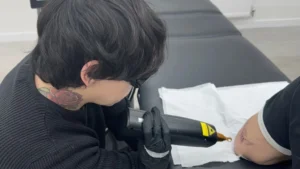
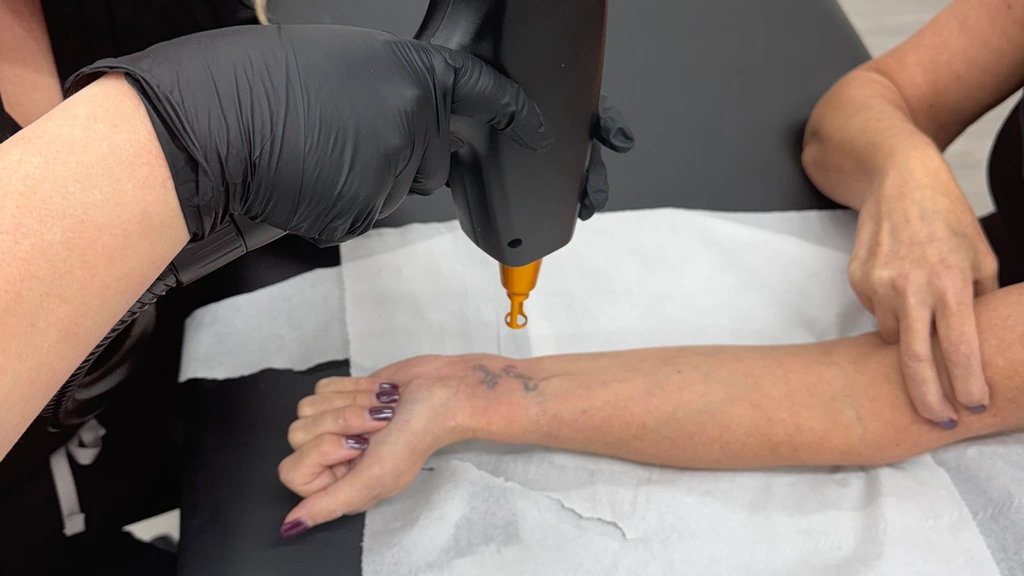
Laser tattoo removal is designed to reduce or remove unwanted tattoo pigment.
Tattoo ink sits within the skin as pigment particles. During treatment, laser energy is directed towards these pigments so that larger particles can be fragmented into smaller pieces.
The body then gradually processes some of these fragments over time.
This means tattoo removal is usually a gradual process involving a series of sessions rather than a single appointment.
A practitioner performing tattoo removal needs to consider factors such as:
- Tattoo colour
- Ink density
- Tattoo depth
- Tattoo age
- Skin type
- Wavelength
- Treatment parameters
- Healing response
- Previous removal treatments
- Client expectations
Students wanting a more detailed explanation of the treatment process can also read How Does Laser Tattoo Removal Work?.
What Is Laser Hair Removal?
Laser hair removal is designed for long-term reduction of unwanted hair.
Instead of targeting tattoo ink, the treatment targets pigment associated with the hair and follicle.
The objective is to deliver controlled energy to the treatment area in a way that affects future hair growth.
Practitioners therefore need to understand:
- Hair growth cycles
- Hair colour
- Hair thickness
- Skin type
- Treatment area
- Laser wavelength
- Treatment settings
- Treatment intervals
- Contraindications
- Client expectations
The Complete Laser Technician Course is suitable for students who want broader laser knowledge, including laser hair removal and tattoo removal.
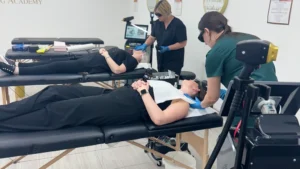
Professional laser hair removal treatment in a Dubai clinic
Laser Tattoo Removal vs Laser Hair Removal: The Main Difference
The simplest difference is what the laser is trying to target.
Laser Tattoo Removal
Laser tattoo removal targets tattoo pigment inside the skin.
The practitioner needs to understand how different tattoo colours absorb different wavelengths and how pigment depth and density may influence treatment.
Laser Hair Removal
Laser hair removal targets pigment associated with the hair follicle.
Practitioners therefore focus more heavily on hair characteristics, growth cycles and the relationship between hair and skin pigmentation.
Although both involve laser technology, they should not be treated as the same procedure with different machine settings.
They involve different treatment objectives and different professional knowledge.
1. They Target Different Pigments
This is one of the biggest differences future practitioners need to understand.
Tattoo Removal Targets Ink
Tattoo ink can contain several colours, including:
- Black
- Blue
- Green
- Red
- Orange
- Purple
- Yellow
Different colours may absorb different wavelengths.
A practitioner may therefore need to adjust the treatment approach according to the pigment present.
Hair Removal Targets Hair Pigment
Laser hair removal is more closely associated with melanin in the hair.
Factors such as the contrast between the client’s hair and skin can influence treatment planning.
This means the consultation process for hair removal focuses heavily on hair colour, thickness, skin tone and growth pattern.
2. The Treatment Goals Are Different
The desired client outcome is another important distinction.
With tattoo removal, the client generally wants unwanted ink to become progressively lighter.
With laser hair removal, the client is normally looking for long-term reduction in unwanted hair growth.
These goals require different consultation conversations.
A tattoo-removal practitioner may need to explain:
- Progressive fading
- Different responses between colours
- Multiple treatment sessions
- Possibility of residual pigment
A hair-removal practitioner may instead explain:
- Hair-growth cycles
- Multiple sessions
- Maintenance treatments
- Differences between treatment areas
- Variations in individual response
3. Tattoo Colour Matters More During Tattoo Removal
Tattoo colour is central to tattoo-removal treatment planning.
Different pigments absorb different wavelengths of light.
A tattoo containing multiple colours may therefore require more complex planning than a simple black tattoo.
Future practitioners should understand how factors such as:
- Colour
- Pigment depth
- Ink density
- Tattoo age
- Professional versus amateur tattooing
can influence treatment response.
Students interested specifically in this area can explore the Laser Tattoo Removal Course.
4. Hair Growth Cycles Matter More During Laser Hair Removal
Laser hair removal requires a strong understanding of hair biology.
Hair does not grow continuously at exactly the same stage.
Different hairs can be in different phases of the growth cycle, which is one reason clients normally require multiple appointments.
Future practitioners need to learn:
- Hair anatomy
- Growth cycles
- Treatment intervals
- Hair thickness
- Hair pigmentation
- Treatment-area differences
The Complete Laser Technician Course provides a broader pathway for students who want to develop skills across multiple laser treatments.
5. Both Treatments Require Careful Skin Assessment
While tattoo removal and hair removal have different objectives, skin assessment is important for both.
Dubai practitioners may work with clients from a broad range of ethnic backgrounds and skin tones.
This makes understanding pigmentation particularly important.
Practitioners should assess factors such as:
- Fitzpatrick skin type
- Natural pigmentation
- Recent tanning
- Sun exposure
- Skin sensitivity
- Previous reactions
- Medication
- Medical history
- Contraindications
Students who want deeper knowledge of professional skin assessment can explore the Ultimate Skin Specialist Diploma.
6. Equipment and Wavelength Requirements Can Differ
Laser technology is not one universal system.
Machines can produce different wavelengths, pulse durations and treatment parameters.
In tattoo removal, wavelength selection is particularly important because different tattoo colours respond differently.
In laser hair removal, technology and settings need to be selected according to factors such as skin type, hair pigmentation and treatment area.
This is why practitioners need more than basic machine-operation training.
They should understand why particular settings are selected.
7. Laser Tattoo Removal Requires Detailed Tattoo Assessment
Before performing tattoo removal, practitioners need to assess the tattoo itself.
Important questions include:
- How old is the tattoo?
- Is it professional or amateur?
- What colours are present?
- How dense is the pigment?
- Has removal already been attempted?
- Is there pre-existing scarring?
- Where is the tattoo located?
A client with a small black tattoo may require a different treatment approach from someone with a large multicoloured tattoo.
8. Laser Hair Removal Requires Detailed Hair Assessment
Hair-removal consultations require a different type of assessment.
Practitioners need to consider:
- Hair colour
- Hair thickness
- Density
- Treatment area
- Skin type
- Previous hair-removal methods
- Growth patterns
- Client expectations
For example, the approach used for coarse body hair may differ from the approach required for finer hair.
Professional treatment plans should therefore be based on assessment rather than using identical settings for every client.
9. Both Usually Require Multiple Sessions
Neither laser tattoo removal nor laser hair removal should generally be presented as a one-session treatment.
Tattoo Removal
Multiple sessions are usually required because tattoo pigment is progressively fragmented and processed over time.
Hair Removal
Multiple treatments are generally needed because hair follicles are not all at the same point in the growth cycle simultaneously.
The number and spacing of appointments can vary significantly from client to client.
Practitioners should therefore avoid guaranteeing an exact result or number of sessions without assessment.
10. Client Expectations Are Different
Expectation management is essential for both services.
A tattoo-removal client may ask:
“Will my tattoo disappear completely?”
A hair-removal client may ask:
“Will the hair never grow back?”
In both cases, practitioners need to communicate carefully.
Individual results can vary, and treatment outcomes can be influenced by biological, technological and treatment-related factors.
Professional consultation should focus on realistic expectations rather than guarantees.
11. Laser Safety Matters in Both Treatments
Both treatments involve professional laser equipment, so practitioners need strong safety knowledge.
Important areas include:
- Protective eyewear
- Treatment-room preparation
- Equipment checks
- Machine settings
- Client positioning
- Skin assessment
- Hygiene
- Treatment documentation
- Contraindications
- Emergency procedures
- Aftercare
12. Aftercare Is Different
Both treatments require aftercare, but the instructions can differ because the skin has been treated for different reasons.
Tattoo Removal Aftercare
Clients may need guidance around:
- Healing
- Redness or swelling
- Crusting
- Avoiding scratching or picking
- Skin protection
- Sun exposure
- Monitoring unusual reactions
Laser Hair Removal Aftercare
Advice may include:
- Avoiding excessive heat
- Avoiding irritating products
- Appropriate sun protection
- Following recommended skincare
- Avoiding certain hair-removal methods between appointments
Practitioners should provide treatment-specific rather than generic aftercare.
13. Which Treatment Should a Future Practitioner Learn?
They lead to different professional skill sets.
Someone particularly interested in tattoo pigmentation, wavelength selection and specialist tattoo-removal procedures may prefer focused training through the Laser Tattoo Removal Course.
Someone wanting a wider laser skill set may prefer the Complete Laser Technician Course, which provides broader laser education.
Students planning a wider professional pathway can also read How to Become a Laser Technician in Dubai.
14. Why Learning Both Can Be Valuable
For practitioners planning a wider career within laser and aesthetics, understanding both treatments can provide a more comprehensive technical foundation.
Learning both can develop knowledge across:
- Hair biology
- Tattoo pigments
- Skin typing
- Wavelengths
- Treatment parameters
- Laser safety
- Consultation
- Contraindications
- Treatment planning
- Aftercare
This can be especially useful for practitioners who eventually want to work within a multi-treatment laser or aesthetics clinic.
15. Building Your Skincare Knowledge
Both laser hair removal and tattoo removal involve direct interaction with the skin.
A strong foundation in skincare can therefore support better consultations and treatment decisions.
Relevant areas include:
- Skin anatomy
- Pigmentation
- Inflammation
- Healing
- Sensitivity
- Contraindications
- Post-treatment care
Students interested in clinical skincare can explore the Level 2 Clinical Skincare Course.
Laser Tattoo Removal vs Laser Hair Removal: Quick Comparison
| Area | Laser Tattoo Removal | Laser Hair Removal |
|---|---|---|
| Main target | Tattoo pigment | Pigment associated with hair |
| Main objective | Fade or remove unwanted tattoos | Long-term hair reduction |
| Main assessment | Ink colour, depth and density | Hair colour, thickness and growth |
| Important science | Pigment and wavelength interaction | Hair growth and melanin |
| Sessions | Usually multiple | Usually multiple |
| Skin assessment | Essential | Essential |
| Safety training | Essential | Essential |
| Practical training | Essential | Essential |
| Aftercare | Tattoo-healing focused | Hair-removal focused |
Start Your Laser Training in Dubai
Laser tattoo removal and laser hair removal use related technologies, but they require different assessment skills, treatment knowledge and client-management approaches.
Future practitioners should understand these differences before deciding how they want to train.
If your main interest is specialist tattoo-removal treatment, explore the Laser Tattoo Removal Course.
If you want to learn tattoo removal alongside laser hair removal and additional laser treatments, explore the Complete Laser Technician Course.
Frequently Asked Questions
1. Is laser tattoo removal the same as laser hair removal?
No. Tattoo removal targets tattoo pigment, while laser hair removal targets pigment associated with unwanted hair. They use different treatment approaches and require different assessment skills.
2. Do tattoo removal and hair removal use the same laser?
Not necessarily. Different laser systems produce different wavelengths and treatment characteristics. Equipment selection depends on the intended treatment, pigment and client factors.
3. Which course should I choose for tattoo removal in Dubai?
Students focusing specifically on tattoo removal can consider the Laser Tattoo Removal Course.
4. Which course should I choose if I want to learn both treatments?
The Complete Laser Technician Course is the broader option for students wanting training across multiple laser treatments.
5. Is tattoo removal more complicated than hair removal?
They involve different technical challenges. Tattoo removal requires particular attention to ink colours, pigment depth and wavelengths, while hair removal requires detailed knowledge of hair-growth cycles, hair characteristics and skin type.
6. Do both treatments require multiple sessions?
Generally, yes. Tattoo fading occurs progressively, while hair-removal treatments are scheduled around hair-growth cycles.
7. Is practical training necessary for both?
Yes. Practical training helps students apply laser theory, treatment settings, safety procedures, consultation and skin assessment in real treatment situations.
8. Can beginners learn laser tattoo removal in Dubai?
This depends on the course entry requirements and previous qualifications. Students should confirm the requirements before enrolling.
9. Can beginners take the Complete Laser Technician Course?
Students should check the current course entry requirements directly on the course page before enrolling.
10. Is skincare knowledge useful for laser practitioners?
Yes. Understanding skin anatomy, pigmentation, sensitivity, healing and contraindications can support safer and more informed client assessment.