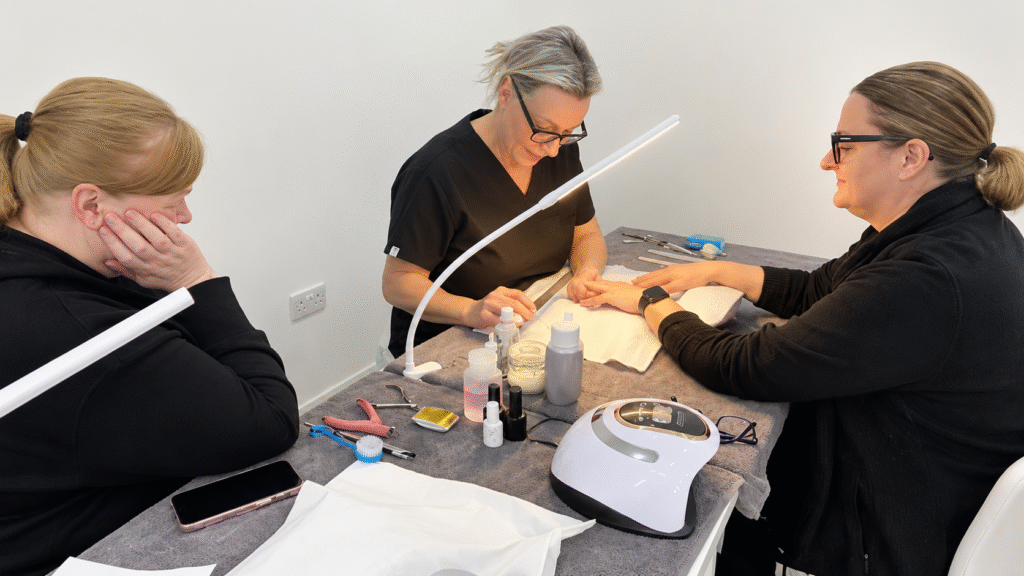
Dubai’s beauty industry offers opportunities for people who want to build careers in specialist services such as manicures, pedicures, gel polish, builder gel, nail extensions and nail art.
For someone entering the beauty industry, becoming a nail technician can be an accessible career route because it combines technical skill, creativity and regular client interaction. However, professional nail work involves much more than simply applying polish.
A trained nail technician needs to understand nail anatomy, hygiene, product chemistry, nail preparation, shaping, extensions, safe removal, client consultation and aftercare.
Students who want to develop a broad range of professional nail skills can explore the Complete Nail Technician Course.
What Does a Nail Technician Do?
A nail technician provides professional treatments for the hands, feet and nails.
Depending on their training and workplace, services may include:
- Manicures
- Pedicures
- Gel polish
- Builder gel
- Nail extensions
- Gel extensions
- Nail shaping
- Cuticle care
- Nail repairs
- Nail art
- Removal and maintenance treatments
A professional nail technician also needs to assess the condition of the client’s natural nails before beginning a service.
Good nail work should focus on both appearance and maintaining appropriate professional treatment practices.
Why Consider Becoming a Nail Technician in Dubai?
Dubai has a substantial beauty and salon industry serving residents, professionals and visitors from many different backgrounds.
Nail treatments are also typically repeat services.
Clients may regularly return for:
- Gel-polish changes
- Manicures
- Pedicures
- Nail-extension infills
- Builder-gel maintenance
- Nail repairs
- New nail designs
This can help nail technicians gradually develop repeat clientele.
The profession can also provide several possible career directions, from working within an established salon to eventually developing an independent client base, subject to the applicable business and professional requirements.
Step 1: Complete Professional Nail Technician Training
The first step is learning correct professional techniques.
Watching online nail videos can provide inspiration, but professional education should also teach subjects that are less visible on social media, such as:
- Nail anatomy
- Hygiene
- Contraindications
- Product handling
- Nail preparation
- Safe filing
- Removal techniques
- Client consultation
- Aftercare
The Complete Nail Technician Course is a suitable starting point for students who want to develop skills across multiple nail services rather than learning only one treatment.
Why Structured Nail Training Matters
A professional course allows students to understand why each step is performed, rather than simply memorising a treatment sequence.
For example, correct nail preparation can affect:
- Product adhesion
- Treatment longevity
- Finished appearance
- Client comfort
- Natural-nail condition
Small mistakes during preparation can affect the entire finished treatment.
Step 2: Learn Nail Anatomy
Professional nail technicians should understand the basic structure of natural nails.
Important areas include:
- Nail plate
- Nail bed
- Cuticle
- Matrix
- Free edge
- Nail folds
- Hyponychium
Understanding nail anatomy helps technicians distinguish between areas that can be worked on and areas that require particular care.
It also helps practitioners recognise when a nail may not be suitable for a treatment.
Step 3: Master Professional Manicure Techniques
Manicure skills provide an important foundation for many other nail services.
A professional manicure may involve:
- Client consultation
- Removing previous polish
- Nail assessment
- Shaping
- Cuticle work
- Nail preparation
- Product application
- Finishing
- Aftercare
Good manicure work requires precision.
A technician should be able to create consistent nail shapes while working carefully around the natural nail and surrounding skin.
Step 4: Learn Professional Pedicure Skills
Pedicure services are another important part of a nail technician’s treatment menu.
Professional pedicure training may cover:
- Nail preparation
- Nail shaping
- Cuticle care
- Foot preparation
- Product application
- Polish or gel application
- Client comfort
- Hygiene
- Aftercare
Pedicure work requires especially strong hygiene practices because technicians work closely with clients’ feet and nails.
Students interested in building a broader beauty and wellness treatment menu later may also explore the Complete Spa Therapist Course.
Step 5: Learn Gel Polish Application
Gel polish is a core service in many modern nail salons.
A professional application involves much more than applying colour.
Technicians need to understand:
- Natural-nail preparation
- Base products
- Thin product application
- Curing
- Colour layers
- Top coat
- Free-edge sealing
- Safe removal
Poor preparation or application can contribute to lifting, uneven finishes or reduced treatment longevity.
The technician should aim for a clean application around the cuticle without flooding the surrounding skin.
Step 6: Develop Builder Gel Skills
Builder gel has become a popular option for clients who want additional structure or reinforcement over their natural nails.
Technicians need to understand:
- Nail preparation
- Product consistency
- Apex placement
- Structure
- Curing
- Shaping
- Refining
- Infills
- Safe removal
Builder gel requires an understanding of nail architecture.
The goal is not simply to make the nail thicker.
The product should be placed carefully to create appropriate structure while maintaining an attractive shape.
Students comparing different professional nail systems can also read BIAB, Gel, Acrylic or Extensions: Nail Skills.
Step 7: Learn Nail Extensions
Nail extensions allow technicians to create additional length and change the appearance of the natural nail.
Depending on the system, technicians may work with techniques such as:
- Gel extensions
- Tips
- Sculpted extensions
- Extension systems
- Structured gel
Future nail technicians should learn:
- Correct sizing
- Placement
- Nail architecture
- Product application
- Filing
- Refining
- Maintenance
- Removal
Extensions should look balanced rather than bulky.
Technical structure becomes especially important as the length of the nail increases.
Students who want to understand two common extension systems in more detail can also read Gel Extensions vs Acrylic Extensions.
Step 8: Understand Nail Shapes
Clients may request many different nail shapes.
Common examples include:
- Square
- Squoval
- Round
- Oval
- Almond
- Coffin
- Ballerina
- Stiletto
The best shape can depend on:
- Natural nail
- Finger shape
- Extension length
- Client lifestyle
- Desired appearance
Professional technicians should be able to create consistent shapes across all ten nails.
Step 9: Develop Nail Art Skills
Nail art allows technicians to add creativity to their treatment menu.
Popular techniques may include:
- French tips
- Chrome
- Ombre
- Glitter
- Foils
- Simple line work
- Dot designs
- Marble effects
- Minimal designs
- Seasonal nail art
Dubai clients may request everything from subtle nude manicures to more detailed luxury nail designs.
A technician does not need to master every artistic style immediately.
Start with clean foundational techniques before progressing into more complicated designs.
Step 10: Make Hygiene a Priority
Hygiene is one of the most important parts of professional nail services.
Technicians work closely with clients’ nails and skin while using tools repeatedly throughout the working day.
Professional practices should include:
- Washing and sanitising hands
- Cleaning workstations
- Appropriate tool disinfection
- Using disposable items when required
- Keeping clean and used tools separate
- Proper product storage
- Cleaning dust from the workspace
- Using fresh towels where applicable
- Avoiding cross-contamination
A clean workstation also gives clients more confidence in the service.
Step 11: Learn to Recognise Contraindications
A nail technician should understand when treatment should not continue.
Potential concerns can include:
- Nail infections
- Significant inflammation
- Open wounds
- Severe nail damage
- Skin infections around the nail
- Allergic reactions
- Unusual nail changes
Technicians should work within their professional scope and avoid attempting to diagnose medical conditions.
When something appears unsuitable for cosmetic treatment, postponing the service can be the appropriate professional decision.
Step 12: Learn Safe Product Removal
Removal is just as important as application.
Incorrect removal can unnecessarily damage the natural nail.
Technicians should learn safe methods for removing:
- Gel polish
- Builder gel
- Nail extensions
- Other professional nail products
Clients should also be advised not to peel or aggressively remove enhancement products themselves.
Safe removal helps preserve the condition of the natural nail.
Step 13: Develop Practical Experience
Nail work depends heavily on hand control and repetition.
Skills improve through supervised practice.
Students should practise:
- Filing
- Shaping
- Cuticle work
- Gel application
- Extension application
- Builder-gel structure
- Nail art
- Product removal
- Client consultation
- Treatment timing
Practical training helps students gradually become more efficient without sacrificing treatment quality.
Step 14: Improve Your Treatment Speed
Beginners often take considerably longer than experienced technicians.
That is normal.
Accuracy should initially take priority over speed.
As techniques become more familiar, appointment times usually become easier to manage.
Technicians can improve efficiency by:
- Preparing tools before appointments
- Organising products logically
- Following consistent treatment sequences
- Practising frequently
- Reducing unnecessary product handling
- Keeping the workstation organised
Speed should never come at the expense of hygiene or technique.
Step 15: Build a Professional Nail Portfolio
Nail services are highly visual.
Photographs of your work can become useful when applying for positions or marketing services.
Your portfolio can include:
- Gel-polish manicures
- Builder gel
- Extensions
- French manicures
- Nail art
- Before-and-after nail transformations
Photographs should ideally have:
- Clean lighting
- Consistent backgrounds
- Clear focus
- Clean cuticle areas
- Minimal filters
Potential clients generally want to see your actual work.
Step 16: Develop Client Consultation Skills
Client communication is an important part of nail services.
Before treatment, ask about:
- Desired colour
- Nail shape
- Preferred length
- Existing products
- Previous reactions
- Lifestyle
- Nail condition
- Desired design
Consultation helps prevent misunderstandings.
For example, a client may request very long extensions even though their work or lifestyle makes that length impractical.
A professional technician should be comfortable discussing alternatives.
Step 17: Learn Client Aftercare
Clients need to understand how to look after their nails between appointments.
Aftercare advice may include:
- Using cuticle oil
- Avoiding using nails as tools
- Wearing gloves for certain household tasks
- Booking maintenance when required
- Avoiding picking products
- Returning for professional removal
- Contacting the technician if unusual reactions occur
Good aftercare can help clients maintain the appearance of their nails and encourage repeat appointments.
Step 18: Decide Where You Want to Work
After completing appropriate training and meeting applicable requirements, nail technicians may consider several career environments.
These can include:
- Nail salons
- Beauty salons
- Luxury spas
- Hotel spas
- Beauty studios
- Multi-treatment beauty businesses
- Mobile services where permitted
- Independent work where permitted
Dubai has nail salons across areas such as Dubai Marina, Downtown Dubai, Jumeirah and other residential and commercial districts, offering services including manicures, gel nails, extensions, nail art and pedicures.
Step 19: Consider Adding Other Beauty Skills
Once nail technicians become confident, some decide to add complementary treatments.
Additional skills can help professionals work within businesses offering several beauty services.
For example, students interested in expanding beyond nails can explore the Complete Lash & Brow Technician Course.
Those interested in skin treatments may consider the Ultimate Skin Specialist Diploma.
The aim should not be to learn everything immediately.
Build strong nail skills first, then add treatments that fit your long-term career plans.
Step 20: Understand the Business Side of Nail Services
If you eventually want to work independently, technical ability is only part of running a successful nail business.
You may also need to understand:
- Service pricing
- Product costs
- Appointment timings
- Deposits
- Cancellation policies
- Rebooking
- Client records
- Inventory
- Marketing
- Social media
- Client retention
Knowing how much each treatment costs you to provide can help you set more sustainable prices.
Step 21: Use Social Media to Showcase Your Nail Work
Nail treatments perform particularly well as visual content.
Social media content can include:
- Before-and-after posts
- Nail transformations
- New colours
- Nail-art videos
- Gel-extension processes
- Builder-gel transformations
- Seasonal designs
- Client reviews
- Nail-care tips
Consistent photography can also make your page look more professional.
Use real examples of your work whenever possible.
Step 22: Keep Improving Your Skills
Nail trends change regularly.
Technicians may see demand for new:
- Nail shapes
- Art styles
- Gel systems
- Builder products
- Extension techniques
- Chrome finishes
- Minimal nail designs
Continued education allows technicians to keep improving rather than relying on the techniques they learned at the beginning of their career.
What Skills Does a Successful Nail Technician Need?
A professional nail technician should develop both technical and interpersonal skills.
Important skills include:
- Attention to detail
- Hand control
- Creativity
- Patience
- Client communication
- Professional hygiene
- Time management
- Product knowledge
- Treatment planning
- Organisation
- Customer service
- Willingness to practise
Technical ability usually improves with repetition.
Consistency is often more valuable than trying to create highly complicated designs before mastering the fundamentals.
Can Beginners Become Nail Technicians?
Yes. Professional nail training can provide a starting point for people who are new to the beauty industry.
Beginners should focus first on developing strong foundations in:
- Natural nail preparation
- Hygiene
- Manicures
- Pedicures
- Gel polish
- Product control
- Shaping
- Safe removal
From there, they can gradually progress into builder gel, extensions and advanced nail art.
The Complete Nail Technician Course provides a broader training route for students who want to develop multiple nail techniques within one professional pathway.
Start Your Nail Technician Career in Dubai
Becoming a nail technician requires a combination of professional training, practical experience, creativity, hygiene and good client service.
A step-by-step route can look like this:
- Complete professional nail training.
- Learn nail anatomy.
- Develop manicure and pedicure techniques.
- Master gel polish.
- Learn builder gel.
- Develop extension skills.
- Practise nail shaping.
- Develop nail art.
- Maintain high hygiene standards.
- Learn safe removal.
- Build practical experience.
- Create a portfolio.
- Develop consultation skills.
- Build repeat clientele.
- Continue professional education.
Students ready to begin can explore the Complete Nail Technician Course and start developing the skills required for a professional nail career in Dubai.
As your career develops, complementary training such as the Complete Spa Therapist Course, Complete Lash & Brow Technician Course or Ultimate Skin Specialist Diploma can help broaden your beauty skill set.
Frequently Asked Questions
1. How do I become a nail technician in Dubai?
A practical starting point is to complete professional nail training covering nail anatomy, hygiene, manicures, pedicures, gel systems, extensions, consultation and safe removal. You should also confirm the current professional requirements applicable to how and where you intend to work.
2. Which course can I take to become a nail technician in Dubai?
Students looking for comprehensive nail training can explore the Complete Nail Technician Course.
3. Can beginners become nail technicians?
Yes. Beginners can start by learning foundational techniques and gradually progress into more advanced systems such as builder gel and extensions.
4. What treatments should a nail technician know?
Useful foundation skills include manicures, pedicures, gel polish, nail preparation, shaping, safe removal and nail maintenance. Technicians can later add builder gel, extensions and nail art.
5. Is practical training important for nail technicians?
Yes. Nail treatments require hand control, precision and product knowledge. Hands-on practice is important for developing consistent professional techniques.
6. Do nail technicians need to understand hygiene?
Yes. Hygiene is fundamental because nail technicians work closely with clients’ skin and nails and use tools throughout the working day.
7. Is builder gel different from normal gel polish?
Yes. Gel polish primarily provides colour and a polished finish, while builder gel is designed to provide additional structure and reinforcement.
8. Can nail technicians learn other beauty treatments?
Yes. After developing strong nail skills, technicians may add complementary qualifications such as the Complete Lash & Brow Technician Course.
9. Can nail technicians work in spas?
Depending on training, role requirements and professional permissions, nail technicians may work in nail salons, beauty salons, spas and other beauty businesses. Students interested in broader spa skills can also explore the Complete Spa Therapist Course.
10. Is a nail technician career suitable for creative people?
Yes. Nail work combines technical precision with opportunities for creative colour combinations, finishes, shapes and nail art.